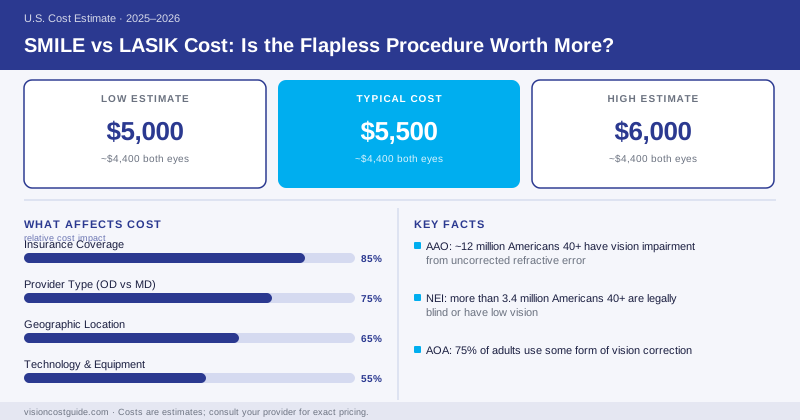
“It’s like LASIK but without the flap.” That’s the pitch you’ll hear for SMILE, and it usually comes with a higher price tag. The question is whether skipping the corneal flap is worth $600 to $1,600 more across both eyes. For some patients it absolutely is. For others, it’s paying extra for a feature they don’t need.
Here’s the cost-and-benefit breakdown.
Two Lasers, Two Techniques
LASIK creates a thin flap in your cornea, lifts it, reshapes the tissue underneath, then lays the flap back down. It’s fast, proven, and the American Refractive Surgery Council reports the national average near $2,200 per eye in 2024.
SMILE (Small Incision Lenticule Extraction) skips the flap. The surgeon uses a femtosecond laser to carve a small disc of tissue inside the cornea, then removes it through a tiny incision. No flap, less surface disruption.
| LASIK | SMILE |
|---|---|
| ~$2,200 per eye | $2,500–$3,000 per eye |
| ~$4,400 both eyes | $5,000–$6,000 both eyes |
| Creates corneal flap | Flapless, tiny incision |
| Treats most prescriptions | Best for myopia + astigmatism |
Why SMILE Costs More
Newer technology, fewer machines, and tighter surgeon certification all push the price up. The VisuMax laser used for SMILE is expensive equipment, and clinics pass that cost along.
There’s also a smaller pool of surgeons trained on it. When fewer providers offer a procedure, prices stay firm. Compared to standard LASIK, you’re paying a premium for the equipment and expertise.
SMILE costs $600–$1,600 more than LASIK across both eyes. The upgrade buys a flapless procedure that may reduce dry eye and keep the cornea structurally stronger. If you have dry eyes or an active lifestyle, that premium can be worth it. If not, LASIK saves you money for similar visual results.
What the Premium Buys
The flapless approach has real clinical upsides. Because there’s no flap to dislodge, SMILE patients face less risk of flap-related complications during contact sports or physical work. The American Academy of Ophthalmology notes that SMILE may also cause less post-op dry eye than LASIK, since fewer corneal nerves are cut.
For a fighter, a soldier, or anyone whose face takes hits, that flapless cornea is genuinely valuable.
Where LASIK Still Wins
SMILE isn’t a do-everything procedure. As of its current FDA approvals, it primarily treats nearsightedness and astigmatism. If you’re farsighted, LASIK or PRK is your route. LASIK also has a longer track record and broader prescription range.
Don’t assume “newer” means “better for you.” SMILE can’t be touched up as easily as LASIK if you need an enhancement later, because there’s no flap to lift. Ask your surgeon how they’d handle a re-treatment before you pay the premium.
Making the Call
- Dry eyes or contact-sports lifestyle? SMILE’s flapless design may justify the extra cost.
- Farsighted or want enhancement flexibility? LASIK is the better and cheaper fit.
- Budget-focused with moderate myopia? LASIK delivers comparable results for less.
Neither procedure is covered by insurance, so both are out-of-pocket. Financing a $5,500 SMILE over 24 months is about $230 a month versus $183 for a $4,400 LASIK. If you’re still deciding whether any laser surgery beats glasses long-term, our look at whether LASIK is worth it runs the numbers.
The verdict: SMILE earns its premium for the right candidate, but LASIK remains the value pick for most.
Frequently Asked Questions
Usually, yes. SMILE averages $2,500–$3,000 per eye versus about $2,200 for LASIK, so expect to pay $600–$1,600 more for both eyes.
SMILE is flapless. The surgeon makes a tiny incision instead of a corneal flap, which may mean less dry eye and a stronger cornea afterward.
Yes. The FDA expanded SMILE approval to include astigmatism in 2018, though severe or mixed astigmatism may still be better suited to LASIK.