Most people on a Spectera plan have no idea that’s what they have. The card in your wallet probably says “UnitedHealthcare Vision” — Spectera is the network underneath it, covering tens of millions of members. If you’re trying to figure out what your benefit actually pays for, here’s the plain-English breakdown.
What Spectera Costs
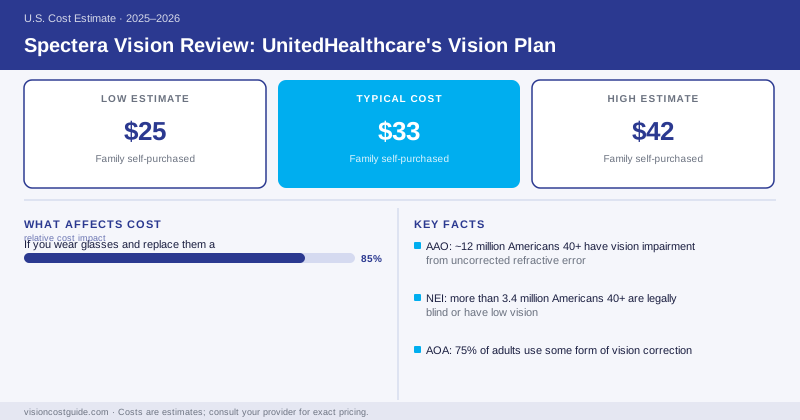
Spectera is almost always offered through an employer rather than sold directly to individuals, which keeps the price low. Subsidized employer plans run $5–$10/month for one person. Where individual plans exist, they land around $12–$22/month, with family coverage at $25–$42/month.
| Plan Type | Monthly Cost | Annual Cost |
|---|---|---|
| Employer individual | $5–$10 | $60–$120 |
| Employer family | $15–$28 | $180–$336 |
| Individual self-purchased | $12–$22 | $144–$264 |
| Family self-purchased | $25–$42 | $300–$504 |
That’s on the affordable end of the market. KFF’s 2024 Employer Health Benefits Survey found that the large majority of big employers offer vision coverage, and UnitedHealthcare is one of the most common carriers — which is exactly why so many workers end up on a Spectera plan without choosing it specifically.
What’s Covered
Spectera follows the standard vision insurance structure, so the benefits will feel familiar:
- Comprehensive eye exam: Covered at 100% or a small copay, once per year
- Frame allowance: $130–$200 depending on plan tier
- Lens benefit: Single vision, lined bifocal, and progressive lenses with copays
- Contact lens allowance: $130–$200 in place of glasses
Spectera’s hidden advantage is integration. If you already have UnitedHealthcare medical insurance, adding their vision plan means one carrier, one login, and one place to manage claims and find in-network doctors. For families juggling multiple benefits, that consolidation is genuinely convenient — and the network of 100,000+ locations includes both independents and big chains like LensCrafters and Target Optical.
The Network Reality
Spectera’s provider list is broad, but the in-network experience varies. National chains are reliably covered, while smaller independent optometrists may or may not participate. Before booking, run your preferred doctor through the UnitedHealthcare Vision provider lookup — out-of-network visits get reimbursed at a much lower flat rate, so going in-network is where the savings live.
One frequent gotcha: the allowance applies at “retail” frame prices, so a $130 allowance against a $300 designer frame still leaves you paying $170. Choose frames at or under your allowance to keep out-of-pocket near zero.
There’s also the question of how Spectera handles out-of-network claims. Unlike going in-network — where the plan pays the provider directly and you just cover your copay — an out-of-network visit means you pay the full bill up front and file for reimbursement, which comes back at a fixed, usually modest, schedule (often $40–$60 toward an exam, far less than the visit costs). For most members, that math makes staying in-network non-negotiable. If your favorite independent optometrist isn’t listed, weigh whether the convenience is worth paying the difference, or whether a different plan with broader independent access fits you better.
The Break-Even Math
Take a typical individual plan at $15/month ($180/year):
If you wear glasses and replace them annually:
- Plan cost: $180
- Exam copay: $10
- Frames after $150 allowance: ~$50
- Lens copay: $25
- Total out-of-pocket: $265
- Without insurance: ~$130 exam + ~$250 glasses = $380
- Net savings: roughly $115/year
The savings improve if you use the plan for both an exam and new lenses every year. If you only need an exam, a basic plan still nearly pays for itself given how a standalone comprehensive exam costs $100–$150.
Spectera’s LASIK benefit is a discount, not coverage — usually 10–25% off through partner providers like QualSight. Don’t expect your vision plan to fund surgery. Medical eye care (glaucoma, diabetic retinopathy, eye injuries) is handled by your medical plan, not Spectera. If you’re planning elective surgery, look at dedicated financing such as CareCredit.
Is Spectera Worth It?
If your employer offers UnitedHealthcare Vision at a subsidized rate, it’s an easy add — the covered exam and frame allowance usually beat paying cash, and the single-carrier convenience is a nice bonus. Compare it against your real annual eye-care spending using our vision insurance cost breakdown before deciding.
For contact wearers, check whether your plan’s allowance covers a full annual supply — it often doesn’t, which narrows the savings. But for the typical glasses-wearing household already inside the UnitedHealthcare ecosystem, Spectera is a convenient and cost-effective choice.
Frequently Asked Questions
Spectera is the vision network behind UnitedHealthcare Vision plans. If your benefits card says UnitedHealthcare Vision, you're using the Spectera network, which includes over 100,000 provider locations.
Spectera/UnitedHealthcare Vision plans run $7–$22/month for individuals, often $5–$10/month when subsidized through an employer.
Yes, Spectera plans cover a comprehensive eye exam every 12 months, typically at 100% or with a $10–$15 copay at in-network providers.