Q: How common is strabismus in children, and does it really need surgery?
A: The American Academy of Ophthalmology estimates strabismus — misaligned eyes, commonly called “crossed eyes” or “wandering eye” — affects roughly 4% of children in the United States. Not every case needs surgery; many mild or intermittent cases are managed successfully with glasses, prism lenses, or vision therapy first. Surgery becomes the recommended path when misalignment is significant, doesn’t respond to non-surgical treatment, or risks the development of amblyopia in the weaker eye.
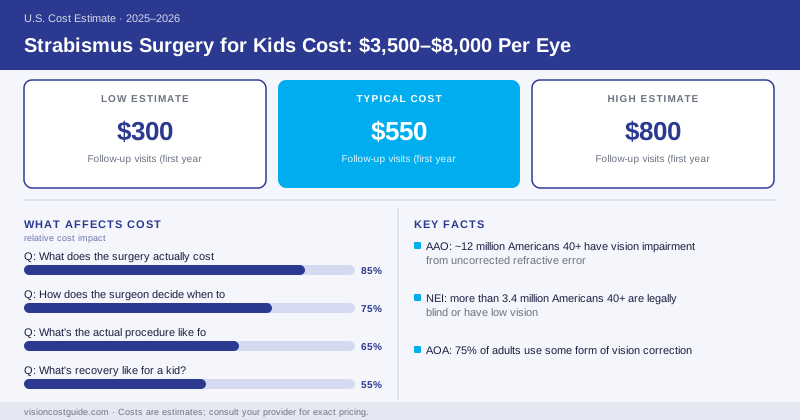
Q: What does the surgery actually cost?
| Cost Component | Price Range | Notes |
|---|---|---|
| Single muscle surgery (one eye) | $3,500–$6,000 | Most common for standard cases |
| Multiple muscle surgery (one eye) | $5,500–$8,000 | For larger deviations |
| Bilateral surgery (both eyes) | $7,000–$14,000 | Common since misalignment often affects both |
| Anesthesia (general, required for children) | $800–$2,000 | Bundled into facility fee at most centers |
| Follow-up visits (first year) | $300–$800 total | Multiple checks to confirm stable alignment |
Q: Is this considered cosmetic surgery that insurance won’t cover?
A: No — this is one of the most common misconceptions parents have. Strabismus surgery in children is classified as functional, medically necessary surgery because untreated eye misalignment can lead to permanent amblyopia (reduced vision) in the deviating eye, along with loss of binocular depth perception. Nearly all health insurance plans, including Medicaid, cover pediatric strabismus surgery when a qualified ophthalmologist documents the diagnosis and recommends surgical correction.
Strabismus surgery for kids costs $3,500–$8,000 per eye, and it’s treated as medically necessary — not cosmetic — surgery by virtually all insurance plans, since untreated misalignment can cause permanent vision loss through amblyopia. Earlier surgical correction, when recommended by an ophthalmologist, generally produces better long-term binocular vision outcomes.
Q: How does the surgeon decide when to operate?
A: Timing depends on the type and severity of strabismus. Some forms, like infantile esotropia, are typically corrected surgically within the first couple years of life to give the developing visual system the best chance at binocular vision. Other forms that develop later, or intermittent strabismus, may be monitored with glasses or vision therapy for a period before surgery is recommended, particularly if the deviation isn’t constant or severe.
Q: What’s the actual procedure like for a child?
A: Pediatric strabismus surgery is performed under general anesthesia, since children can’t be expected to hold still for the muscle adjustment the way adults sometimes can under local anesthesia. The surgeon repositions one or more of the muscles controlling eye movement to correct the alignment, typically completing the procedure in under an hour, with the child going home the same day.
Q: What’s recovery like for a kid?
A: Most children experience redness and mild discomfort for about a week, with eye drops or ointment prescribed during that time. Most kids return to school within a few days to a week, though contact sports and swimming are typically restricted for a couple weeks to reduce infection risk while the eye heals.
Q: Does one surgery always fix it permanently?
A: Not always — recurrence or under/over-correction happens in a meaningful minority of pediatric cases, sometimes requiring a second surgery months or years later, particularly with larger initial deviations or certain complex forms of strabismus. Your ophthalmologist will schedule regular follow-up visits specifically to catch drift in alignment early, when adjustment is often simpler.
Don’t delay an ophthalmologist evaluation if you notice your child’s eyes appear misaligned, even intermittently. The window for correcting amblyopia and developing normal binocular vision narrows considerably as children get older — earlier diagnosis and treatment consistently produce better long-term outcomes than the same treatment started later.
Bottom Line
At $3,500–$8,000 per eye, pediatric strabismus surgery is a significant expense, but insurance coverage is the norm rather than the exception given its functional, medically necessary classification. If your child’s ophthalmologist recommends surgery, don’t assume it’s an elective cosmetic decision you’ll be paying for entirely out of pocket.