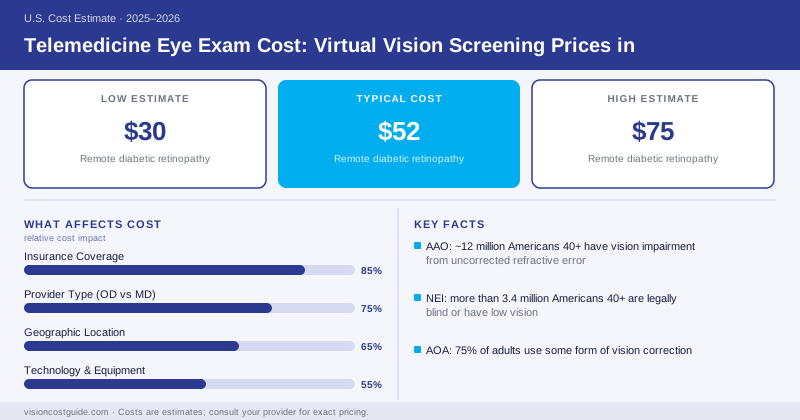
In 2015, getting your eyes checked meant taking time off work, driving to an office, and sitting in a waiting room flipping through outdated magazines. Today, you can get a basic vision screening and even a refraction update from your couch in about 20 minutes — for a fraction of the in-person price. But “basic” is doing a lot of work in that sentence, and it’s worth understanding exactly where the line sits.
What Telemedicine Eye Exams Actually Cost
| Service | Telemedicine Cost | In-Person Equivalent Cost |
|---|---|---|
| Basic vision/acuity screening app | $0-$20 | N/A (screening only) |
| Online refraction for glasses prescription renewal | $20-$60 | $100-$250 (comprehensive exam) |
| Virtual contact lens prescription renewal | $30-$60 | $100-$200 |
| Telemedicine urgent visit (pink eye, minor irritation) | $40-$90 | $100-$250 (urgent care/ER much higher) |
| Remote diabetic retinopathy screening (photo-based) | $30-$75 | $150-$300 comprehensive dilated exam |
| Comprehensive dilated eye exam | Not available via telehealth | $100-$250 |
What Telemedicine Can Actually Handle
Virtual eye care platforms — services like Warby Parker’s Prescription Check, 1-800 Contacts’ online exam, or general telehealth platforms with eye care add-ons — can legally and clinically handle a specific, limited set of tasks: renewing an existing, stable glasses or contact lens prescription, screening visual acuity with a smartphone-based test, and doing basic triage for symptoms like redness or irritation to determine whether an in-person visit is urgent.
These services generally require you to already have an existing prescription on file and be within a defined validity window (often within 2 years of your last comprehensive exam), and they typically exclude people with certain risk factors like diabetes, high prescriptions, or a history of eye disease.
What Telemedicine Cannot Do
A dilated comprehensive eye exam — checking for glaucoma, cataracts, macular degeneration, and diabetic retinopathy — requires equipment (a slit lamp, tonometer, and dilating drops) that doesn’t exist in a video call. The American Academy of Ophthalmology and American Optometric Association both maintain that telemedicine is a supplement to, not a replacement for, periodic comprehensive in-person exams, particularly for anyone over 40, anyone with diabetes, or anyone with a family history of glaucoma.
One notable telemedicine success story: photo-based diabetic retinopathy screening, where a technician (often at a primary care office or pharmacy) takes retinal photographs that are then read remotely by an ophthalmologist or AI-assisted grading system. The CDC notes that fewer than 60% of adults with diabetes get their recommended annual eye exam, and remote screening programs have measurably improved that compliance rate in several health systems by removing the separate specialist-visit barrier. This costs $30-$75 and, if it flags a problem, is followed by an in-person visit for full evaluation and treatment.
Insurance Coverage for Telemedicine Eye Care
Insurance coverage for virtual eye exams expanded significantly following pandemic-era telehealth policy changes, and many vision insurance plans now cover a portion of online refraction services similarly to in-person routine exams. However, coverage is inconsistent — some vision plans exclude telemedicine refractions entirely, treating the in-person comprehensive exam as the only “covered” exam type. Call your vision insurer and ask specifically whether “remote refraction services” or “telehealth vision exams” are a covered benefit before assuming reimbursement.
Who Telemedicine Makes Sense For
Telemedicine eye exams work best for healthy adults under 40 with stable, low-to-moderate prescriptions who need a routine renewal and have had a comprehensive in-person exam within the last year or two. They are a poor fit for anyone with diabetes, a family history of glaucoma or macular degeneration, sudden vision changes, eye pain, or flashes and floaters — all of which need in-person, same-week evaluation regardless of cost.
Never use a telemedicine vision screening in place of a comprehensive dilated exam if you have diabetes, are over 60, or have a family history of glaucoma or macular degeneration. These conditions frequently show no symptoms until permanent vision loss has already occurred, and only in-person testing with specialized equipment can catch them early.
Bottom Line
Telemedicine is genuinely cheaper and faster for prescription renewals and basic triage — but it’s a narrow tool, not a substitute for the periodic in-person dilated exam that catches the diseases that actually threaten your vision.