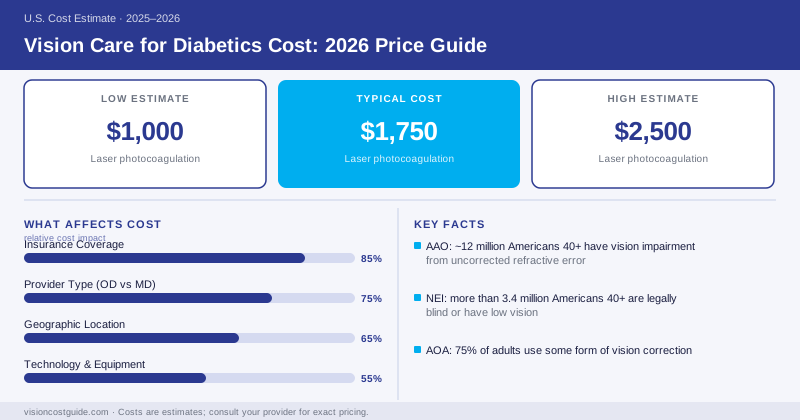
About one in three adults with diabetes over age 40 shows some sign of diabetic retinopathy, the National Eye Institute reports — and it’s the leading cause of new blindness in working-age Americans. The hard truth: catching it early is cheap, and missing it is catastrophic. Diabetic vision care runs $250 to $2,000-plus a year depending on whether you’re screening or treating.
Here’s how to budget for it and where insurance steps in.
The annual dilated exam is non-negotiable
If you take one thing from this guide, take this: the American Diabetes Association recommends a yearly dilated eye exam for everyone with diabetes. Early diabetic retinopathy has no symptoms — none. By the time vision blurs, damage is often advanced.
| Service | Typical Cost | Usually Covered? |
|---|---|---|
| Annual dilated diabetic eye exam | $100–$250 | Often (medical) |
| Eyeglasses / updated Rx | $150–$600 | Vision plan only |
| Retinal imaging / OCT scan | $50–$250 | Often (medical) |
| Anti-VEGF injection (per dose) | $150–$2,000 | Often (medical) |
| Laser photocoagulation | $1,000–$2,500 | Often (medical) |
The single most important — and cheapest — thing a diabetic can do is get a dilated eye exam every year, costing $100 to $250 and frequently covered as a medical benefit. It catches retinopathy before symptoms start, when treatment is simplest and least expensive.
Why diabetic exams are billed differently
Here’s a quiet advantage: because a diabetic dilated exam screens for disease, it’s usually billed as a medical exam, not a routine vision check. That means your health insurance or Medicare often covers it — even when those same plans won’t pay for a routine eye exam. Always ask the office to bill it as a diabetic exam and confirm coverage first.
Don’t wait for blurry vision to see your eye doctor. The NEI is clear that diabetic retinopathy can progress silently to a dangerous stage with no warning signs. Skipping the annual dilated exam is the costliest mistake a diabetic can make — early detection prevents most diabetes-related vision loss.
When treatment becomes necessary
If retinopathy is found, the costs change shape. Treatment options include:
- Anti-VEGF injections to stop abnormal blood-vessel growth — often a series, with per-dose costs ranging widely by drug and coverage.
- Laser photocoagulation to seal leaking vessels, typically $1,000 to $2,500 per session.
- Vitrectomy surgery for advanced cases, the priciest tier.
Good blood-sugar control is the foundation under all of it — the ADA notes that tight glucose management significantly slows retinopathy progression.
Glasses and fluctuating vision
Diabetics often notice their prescription shifts with blood-sugar swings. That’s real — high glucose changes the lens shape temporarily. The AOA suggests waiting until your sugars are stable before ordering new eyeglasses, or you may pay for a prescription that’s wrong in a week. If you’re middle-aged and juggling reading and distance, progressive lenses handle both, but lock in your numbers first.
How to manage the cost
- Bill the exam as medical, not routine, to tap health insurance or Medicare.
- Keep a vision insurance plan for the glasses side, which medical plans skip.
- Use FSA/HSA for exams, glasses, and treatment copays.
- Stay on top of blood sugar — the cheapest “treatment” there is.
- Don’t reorder glasses during a sugar spike; wait for stable numbers.
Bottom line
Diabetic vision care starts with a yearly dilated exam — $100 to $250, usually covered medically, and the best money you’ll spend. Catch retinopathy early and you may never face the $1,000-to-$2,000 treatment tier. Skip the exam, and silent damage can cost you far more than dollars. Book it every single year.
Frequently Asked Questions
A baseline of $250 to $600 covers the recommended annual dilated exam and glasses. If diabetic retinopathy needs treatment, costs can run $1,000 to $2,000+ a year for injections or laser therapy.
The American Diabetes Association and AOA recommend a comprehensive dilated eye exam at least once a year for people with diabetes, and more often if retinopathy is already present.
Often yes. Because a diabetic dilated exam is medical, not routine, it's frequently covered by health insurance and Medicare — unlike a routine vision exam. Confirm with your plan.