Picture a household of four where everyone wears glasses or contacts. Four eye exams a year. A couple of new pairs for the kids whose prescriptions keep shifting. Pay cash and that’s easily $800+. A family vision plan can knock a big chunk off that — but only if you actually use it. Here’s the math that tells you whether it’s worth it for your household.
What Family Vision Coverage Costs
Price comes down to how you get the plan. Through an employer, family coverage is heavily subsidized; buy it solo and you pay the full freight.
| Source | Monthly Cost | Annual Cost |
|---|---|---|
| Employer family (subsidized) | $15–$25 | $180–$300 |
| Individual market family | $35–$60 | $420–$720 |
| Medicaid (eligible children) | $0 | $0 |
KFF’s 2024 Employer Health Benefits Survey found that the large majority of big employers offer vision benefits, and family tiers are usually a modest step up from individual coverage — making the employer route the clear value play when it’s available.
Notice how flat the family pricing is. Most plans charge one family rate whether you’ve got one child or four, so larger households get more value per dollar. A family of five pays the same $20/month as a family of three, but spreads that premium across five covered exams and five frame allowances. That’s a meaningfully different calculation than, say, medical insurance, where adding dependents usually raises the premium. For big families especially, vision coverage tends to be one of the most cost-effective benefits on the open-enrollment menu.
What a Family Plan Covers Per Person
Family plans extend the standard vision insurance benefits to each covered member:
- Annual eye exam for every family member: 100% covered or a small copay
- Frame allowance per person: $130–$200 every 12–24 months
- Lens benefit per person: single vision, bifocal, progressive with copays
- Contact allowance per person in place of glasses
Kids are what make family vision plans pay off. Children’s prescriptions change fast, so they often need new glasses every year — sometimes more than once. With four covered exams plus a kid or two needing fresh frames annually, the plan’s value adds up quickly. A household that all gets exams can have the covered exams alone exceed the entire premium.
The Break-Even Math for a Family of Four
Take an employer family plan at $20/month ($240/year), assuming all four get exams and two kids need new glasses:
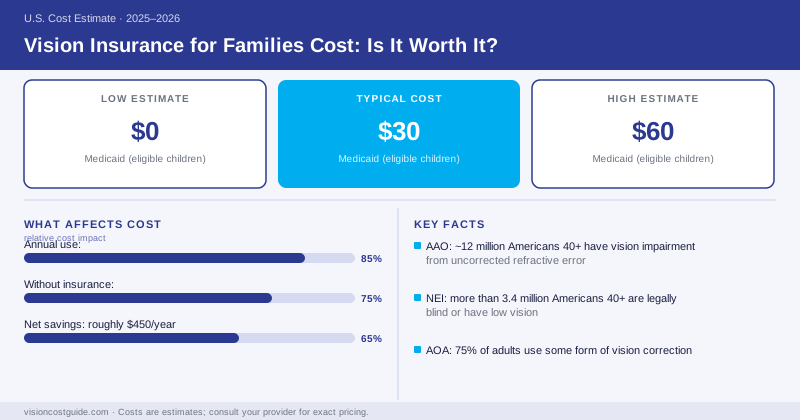
Annual use:
- Plan cost: $240
- 4 exam copays: ~$40
- 2 kids’ frames after allowance: ~$100
- Lens copays: ~$50
- Total out-of-pocket: ~$190 + $240 premium = $430
Without insurance:
- 4 exams at $120: $480
- 2 pairs of kids’ glasses at $200: $400
- Total: $880
Net savings: roughly $450/year. For an active family, the math is strongly in favor of coverage — the four covered exams alone nearly justify the premium.
When a Family Plan Doesn’t Pay Off
It’s a tougher call if:
- Only one family member needs vision correction (an individual plan may cost less)
- Your kids qualify for Medicaid vision benefits or CHIP, which often cover children’s exams and glasses at no cost
- Nobody buys new eyewear most years and you only need occasional exams
Don’t double-pay across two working spouses’ plans — coordinate so the family is covered under whichever employer plan is cheaper, not both. And check whether the kids qualify for free vision coverage through Medicaid or CHIP before buying a family plan; eligible children can get exams and glasses at no cost, which may make a paid family tier unnecessary for them.
How to Decide
Tally how many family members get annual exams and how often anyone buys glasses or contacts. If two or more members use eye care yearly — especially kids with changing prescriptions — a subsidized employer family plan almost always wins. If your usage is light, compare against individual coverage using our vision insurance worth-it analysis.
Either way, pair the plan with an FSA: every family member’s exams, glasses, and contacts are eligible expenses you can pay for with pre-tax dollars, stacking 20–30% in tax savings on top of whatever the plan covers.
Frequently Asked Questions
Family vision insurance runs $15–$25/month through an employer (subsidized) or $35–$60/month on the individual market, covering a spouse and dependent children.
For households where multiple members get annual exams or buy glasses, yes. The covered exams alone for 3–4 people often exceed the premium, making the plan pay for itself.
Yes. Family plans typically cover each child's annual exam plus a frame allowance, which is valuable since kids often need new glasses yearly as prescriptions change.