Your employer offers vision benefits and asks you to pick one: VSP or EyeMed. The monthly cost looks nearly identical, so you flip a coin. Don’t. The wrong choice can mean your eye doctor isn’t covered and you pay full price anyway. The premium is almost a tie. The network is where the money is won or lost.
Here’s how to choose the one that actually saves you cash.
The Premium Comparison
For individual plans, both VSP and EyeMed land in the same range, roughly $13–$30 a month depending on the tier. Through an employer, the cost is often $5–$15 a month after the company’s contribution.
The benefits structure is similar too: a covered annual exam, an allowance toward frames or contacts, and a discount on lenses.
| VSP | EyeMed |
|---|---|
| $13–$30/mo individual | $13–$30/mo individual |
| Strong private-OD network | Strong retail network |
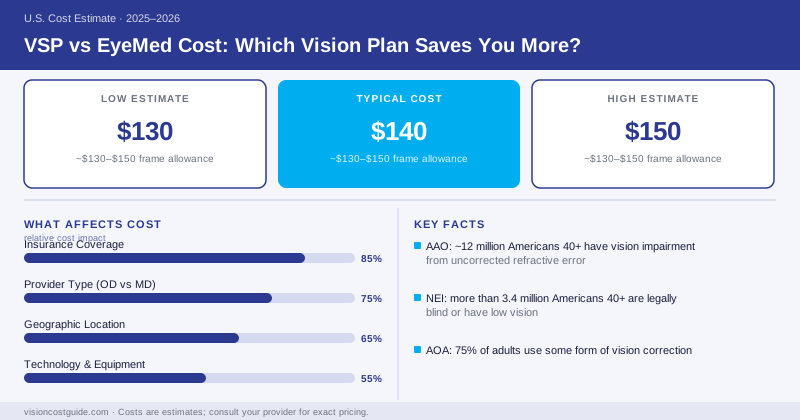
| ~$130–$150 frame allowance | ~$130–$150 frame allowance |
| Partners with many independents | LensCrafters, Target, Pearle |
Where They Differ: The Network
This is the whole ballgame. VSP runs the largest doctor network in the country and tends to partner with independent optometrists and private practices. If you love your local eye doctor, check if they take VSP first.
EyeMed has a broad retail footprint. It’s the plan most aligned with chains like LensCrafters, Target Optical, and Pearle Vision, plus strong online coverage. If you shop at retail optical or buy glasses at the mall, EyeMed often fits better.
The premiums are basically a tie at $13–$30 a month. Pick based on your provider. Choose VSP if you see an independent optometrist. Choose EyeMed if you shop at retail chains like LensCrafters or Target Optical. The in-network match is what determines your real savings, not the monthly price.
What Both Plans Cover
Vision insurance is less like health insurance and more like a discount membership. The American Optometric Association recommends a comprehensive eye exam every one to two years for healthy adults, and both plans cover that exam with a small copay.
Typical covered benefits:
- Annual eye exam (usually a $10–$25 copay)
- Frame allowance around $130–$150 once a year or every two years
- Lens coverage with copays for upgrades like progressives or anti-glare
- A contact lens allowance you can choose instead of frames
Doing the Math on Whether It’s Worth It
A vision plan only pays off if you use it. At $20 a month, you’re spending $240 a year. If you get one exam ($150 value) plus a pair of glasses ($300 value) or a year of contacts, you come out ahead. Skip the eyewear and you may lose money. Our deeper vision insurance cost breakdown runs these scenarios.
Don’t enroll without checking your provider’s network status. Going out of network slashes your reimbursement, sometimes to a flat $50 instead of full coverage. A five-minute call to your eye doctor’s billing desk can save you a year of wasted premiums.
The Quick Decision
- See an independent optometrist? VSP usually wins.
- Shop LensCrafters, Target, or Pearle? EyeMed is the match.
- Buy a lot online? Check which plan reimburses your retailer.
- Rarely buy eyewear? A discount-only plan may beat both.
Both are solid plans at similar prices. The smartest pick is simply the one your eye doctor and favorite optical shop already accept.
Frequently Asked Questions
Premiums are similar, roughly $13–$30 a month for individuals. Your real savings depend on whether your eye doctor is in that plan's network.
VSP runs its own provider network and partners with private optometrists. EyeMed has a larger retail footprint, including LensCrafters, Target Optical, and Pearle Vision.
EyeMed generally has stronger retail and online coverage, while VSP often pairs better with independent eye doctors.