$4,800. That’s the average bilateral LASIK bill at a quality clinic in 2025 — and yes, it stings. But run the math over 10 years against daily contact lenses plus glasses, and LASIK almost always wins on cost. The real question isn’t whether LASIK is cheap. It’s whether it’s the better financial decision for your situation — and whether you’re a good candidate in the first place.
Here’s a clear-eyed 10-year comparison.
The 10-Year Cost Model
Run two scenarios side by side: a typical contact lens wearer who also keeps glasses, versus someone who gets LASIK at age 30 and needs one enhancement at year 8.
| Expense Category | 10-Year: Glasses + Contacts | 10-Year: LASIK |
|---|---|---|
| Corrective procedure | $0 | $4,000–$6,000 |
| Annual contact lenses | $3,500–$6,000 | $0 |
| Contact lens solution | $1,000–$2,000 | $0 |
| Annual eye exams | $1,200–$2,000 | $1,200–$2,000 |
| Glasses (2 pairs, replace every 4 yrs) | $800–$2,400 | $200–$600 (backup) |
| LASIK enhancement (5–10% of patients) | $0 | $500–$1,500 |
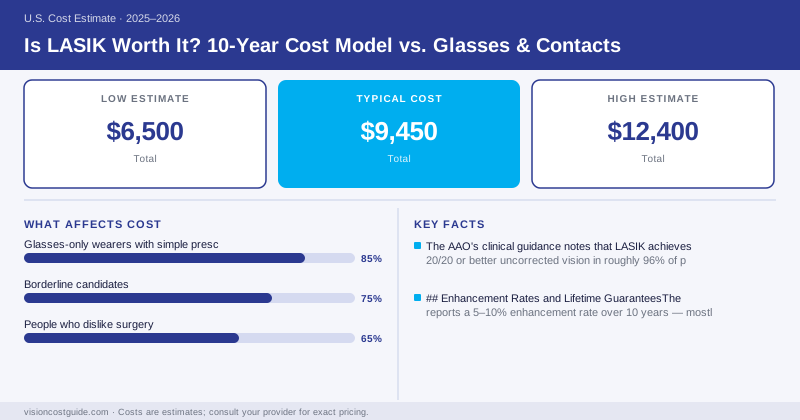
| Total | $6,500–$12,400 | $5,900–$10,100 |
The crossover point for a daily-disposable wearer is typically year 5–7. For a monthly-lens wearer with lower annual lens costs, it’s closer to year 8–9. LASIK is genuinely not worth it financially if you primarily wear budget glasses and have a simple prescription.
What the Patient Satisfaction Data Actually Says
The American Society of Cataract and Refractive Surgery (ASCRS) reports that more than 95% of LASIK patients are satisfied with their outcomes — one of the highest satisfaction rates for any elective surgical procedure. The AAO’s clinical guidance notes that LASIK achieves 20/20 or better uncorrected vision in roughly 96% of patients with mild-to-moderate prescriptions.
That satisfaction data includes the 5–10% of patients who need a touch-up enhancement within 10 years. Enhancements are effective and bring outcomes back to target in most cases.
Daily contact wearers with $400–$700/year in lens costs get the clearest financial win. People with active lifestyles — athletes, swimmers, outdoor workers — often cite quality-of-life gains that go beyond dollars. Patients over 40 should factor in that presbyopia (needing reading glasses) will affect them regardless of LASIK — so factor in reading glasses as a future cost either way.
What Makes LASIK Not Worth It
The math tips against LASIK in a few scenarios:
Glasses-only wearers with simple prescriptions. If you spend $150–$200/year on glasses and skip contacts entirely, your 10-year cost is only $1,500–$2,000 — well below LASIK’s upfront price. The payback period stretches past 15 years.
Borderline candidates. Thin corneas, dry eye disease, irregular astigmatism, or unstable prescriptions disqualify patients or significantly raise the risk of a suboptimal outcome. The LASIK savings calculation is irrelevant if your candidacy is questionable.
People who dislike surgery. A 0.1% serious complication rate sounds tiny — but it’s your eyes. If the psychological cost of elective eye surgery feels too high, that’s a legitimate consideration no cost model captures.
Enhancement Rates and Lifetime Guarantees
The ASCRS reports a 5–10% enhancement rate over 10 years — mostly driven by prescription regression, particularly in high myopes. At reputable clinics, many of these are covered under lifetime enhancement programs at no additional charge. Read the contract carefully: most programs require annual check-up visits at the same clinic to remain active.
At clinics without lifetime guarantees, a touch-up runs $500–$1,500 per eye. Budget this possibility into your calculation if you’re choosing a clinic that doesn’t offer a guarantee.
“Lifetime guarantee” programs typically have conditions: you must return for annual follow-up visits at the same clinic, and enhancements may be excluded if dry eye or other contraindications develop. A guarantee that’s lapsed because you skipped the annual visit isn’t protection. Understand the terms before choosing a clinic based on its guarantee.
The Verdict on LASIK’s Worth
For daily contact wearers who are good candidates, LASIK is worth it on both financial and quality-of-life grounds. The 10-year cost math favors surgery by $600–$2,300 over contacts-plus-glasses, and the freedom from daily lens maintenance is a real lifestyle benefit that 95%+ of patients say they value.
For glasses-only wearers or part-time contact users with low annual lens costs, the financial case is thinner — but quality of life still matters.
Get a proper candidacy evaluation before making any decision. About 15–25% of interested patients aren’t good candidates, and the exam tells you which group you’re in.
See also: LASIK Eye Surgery Cost for the full procedure pricing breakdown and LASIK vs. PRK Cost if you’re weighing alternatives.