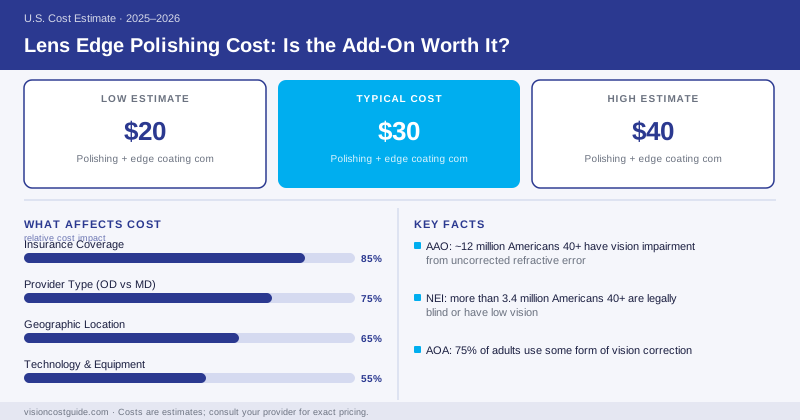
Ever notice the frosted, ground-glass look on the edge of a thick lens? Polishing turns that cloudy edge clear and shiny, making the lens look thinner. It’s a $10–$30 add-on that’s either a smart finishing touch or a pointless upsell — and which one depends entirely on your frame and prescription.
Lens edge polishing is one of those optional extras opticians and online checkouts quietly offer. Most people don’t know what it does, let alone whether to pay for it. Here’s the straight answer.
Lens Edge Polishing Price Breakdown
| Item | Cost |
|---|---|
| Online add-on (many retailers) | $0–$10 |
| Online add-on (premium) | $10–$20 |
| In-store optician add-on | $15–$30 |
| Bundled in premium lens package | Often included |
| Polishing + edge coating combo | $20–$40 |
The price is low across the board, which is part of why it’s an easy upsell. The real question isn’t whether you can afford it — it’s whether it’ll make any visible difference on your specific glasses.
What Polishing Actually Does
When a lens is ground to fit a frame, the cut edge comes out matte and frosted. Polishing buffs that edge to a smooth, transparent finish. The optical effect is subtle but real: a polished edge reflects light cleanly instead of scattering it, so thick lens edges look thinner and less obvious. On a strong minus prescription, where edges can be several millimeters thick, the difference is noticeable.
Lens edge polishing costs $10–$30 and makes thick lens edges look thinner and clearer. It’s genuinely worth it for strong prescriptions in rimless or thin-rim frames where the edge shows. For full-rim frames that hide the edge entirely, it’s money you don’t need to spend. Match the add-on to your frame, not the upsell pitch.
When It’s Worth Paying For
Polishing earns its keep when:
- You have a strong prescription with thick lens edges
- Your frame is rimless or semi-rimless, leaving the edge exposed
- You’ve chosen a thin metal or wire frame where the edge peeks out
- You simply want the cleanest possible cosmetic finish
In these cases, the visible edge is part of how your glasses look, and a polished edge looks markedly better.
When to Skip It
Skip polishing when you have a full-rim frame that completely covers the lens edge — nobody will ever see it, so polishing it is purely decorative and invisible. Also skip it for very mild prescriptions where the edge is already thin and clean. There’s no optical or comfort benefit; it’s strictly cosmetic for the exposed edge.
Edge polishing doesn’t improve your vision. It’s a purely cosmetic finish on the lens edge — it has zero effect on clarity, comfort, or how well you see. Don’t let it be sold as a vision upgrade. If an optician implies it sharpens your eyesight or reduces glare, that’s the job of an anti-reflective coating, not edge polishing. Pay for it only if you care how the edge looks.
Polishing vs. High-Index Lenses
If your goal is genuinely thinner lenses, edge polishing is a cosmetic shortcut — it makes a thick edge look thinner but doesn’t actually reduce thickness. High-index lenses do reduce real thickness, but cost considerably more. For strong prescriptions, the best look usually combines high-index lenses (for actual thinness) with edge polishing (for the finishing clarity). For moderate prescriptions, polishing alone often does enough.
Bottom Line
Lens edge polishing costs $10–$30 and is a low-stakes cosmetic add-on. It’s worth it for strong prescriptions in rimless or thin-rim frames, and a waste on full-rim frames that hide the edge. It won’t improve your vision — it just makes the visible edge look cleaner. Decide based on your frame style, and weigh it alongside other lens choices when figuring out your total eyeglasses cost.
Frequently Asked Questions
Lens edge polishing typically costs $10–$30 as an add-on. Some online retailers offer it free or for a few dollars, while in-store opticians may bundle it or charge up to $30.
It smooths and clarifies the exposed edge of a lens so it looks thinner and less noticeable, especially on stronger prescriptions in rimless or semi-rimless frames where the edge shows.
It's worth it mainly for strong prescriptions and rimless or thin-rim frames where the lens edge is visible. For full-rim frames that hide the edge, it usually adds little value.