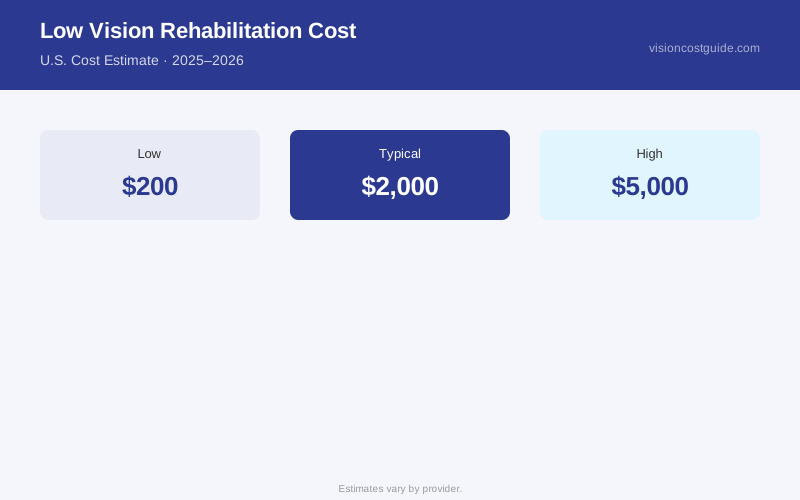
“Your prescription can’t be improved further with glasses.” For the 12 million Americans over age 40 with vision impairment that can’t be fully corrected — a figure from the CDC’s 2022 Vision and Eye Health Surveillance System report — those words represent a turning point. But they’re not the end of the story. Low vision rehabilitation is a specialty field dedicated to maximizing functional vision using the sight that remains. The costs vary widely, and knowing which services are covered can be the difference between accessing life-changing tools and never learning they existed.
What Low Vision Rehabilitation Includes
Low vision rehab is a multidisciplinary process, not a single appointment. It typically involves:
- Low vision evaluation by an optometrist or ophthalmologist specializing in low vision
- Optical device training — magnifiers, telescopic spectacles, reading systems
- Occupational therapy for vision-related daily living activities
- Orientation and mobility training — navigating independently
- Electronic and assistive technology assessment
Each component has its own cost and insurance coverage pathway.
Cost by Service Type
| Service | Cost Range | Medicare Coverage |
|---|---|---|
| Low vision evaluation (OD/MD specialist) | $200–$600 | Part B covers (80/20 after deductible) |
| Optical magnifiers (handheld, stand) | $30–$300 each | NOT covered (considered DME prosthetics) |
| Bioptic telescopic spectacles | $1,200–$3,500 | NOT covered |
| Electronic video magnifier (CCTV/desktop) | $500–$3,000 | NOT covered by Medicare |
| Portable electronic magnifier (handheld) | $200–$800 | NOT covered |
| Screen reading software (JAWS, ZoomText) | $100–$1,000/year | NOT covered |
| Occupational therapy (low vision focus) | $150–$350/session | Part B covers (up to 20 sessions/year typical) |
| Orientation & mobility specialist | $80–$150/hour | State vocational rehab may cover |
The gap in Medicare coverage for optical and electronic devices is significant — and surprising to many patients. Medicare Part B covers the evaluation and therapy components as medical services, but it doesn’t cover low vision aids as durable medical equipment (DME) the way it covers wheelchairs or oxygen. The rationale is regulatory history, not clinical logic. Congress has historically excluded eyeglasses and vision aids from Medicare DME coverage except in very narrow post-surgical circumstances.
Conditions That Lead to Low Vision Rehab
Low vision is the domain where macular degeneration, glaucoma, diabetic retinopathy, retinitis pigmentosa, and other progressive retinal and optic nerve diseases ultimately lead. The NEI reports that AMD alone affects more than 2 million Americans with significant visual impairment, and that figure rises sharply with age — nearly 15% of people 80 and older have AMD-related vision loss.
Most patients arrive at low vision rehab having already invested heavily in treating their underlying condition. The rehab phase is about adaptation and maximizing independence with whatever vision remains.
Funding Sources Beyond Medicare
State agencies for the blind/visually impaired: Every state has a vocational rehabilitation agency (often called the “Commission for the Blind” or “Division of Vocational Rehabilitation”) that provides low vision evaluations, devices, and training at little or no cost for qualifying individuals. Income and employment-related eligibility vary by state. Start at AFB.org for your state’s agency directory.
Veterans Administration (VA): Veterans with service-connected or non-service-connected vision loss receive comprehensive low vision rehabilitation through VA Visual Impairment Services Teams (VIST) at VA facilities — completely covered.
Lions Clubs International: Local Lions Clubs chapters frequently fund low vision aids and eyeglasses for people who can’t afford them. Submit requests through your eye care provider or directly at your local chapter.
Device manufacturer programs: Companies like HumanWare, Freedom Scientific, and Eschenbach have loaner programs and financial assistance for assistive technology devices.
State Assistive Technology programs: Every state has a federally funded AT program under the Assistive Technology Act that provides device loans, demonstrations, and sometimes low-interest financing for assistive technology.
The Low Vision Specialist: Finding the Right Provider
Not every optometrist or ophthalmologist has low vision training. A low vision specialist has completed additional training in prescribing and fitting magnification devices, adaptive strategies, and functional visual assessment. The American Academy of Optometry and the American Optometric Association both maintain directories of low vision specialists.
When choosing a specialist, ask:
- Do you prescribe and dispense low vision optical devices in the office, or refer out?
- Do you work with an occupational therapist for ADL (activities of daily living) training?
- Are you familiar with state vocational rehab funding pathways?
A comprehensive low vision program — evaluation, device prescription and training, follow-up OT — can cost $2,000–$5,000 out of pocket if accessed entirely privately. With Medicare covering the evaluation and OT sessions, and state agencies covering devices, the same scope of services may cost $0–$500 in copays.
Electronic Magnification: The Most Impactful Category
For most patients with central vision loss (macular disease), electronic magnification produces the most functional improvement. Options span a wide price range:
- Smartphone apps (Seeing AI by Microsoft, Magnifier): Free — often the first tool to try
- Tablet with accessibility features (iPad Zoom): $300–$600 for the tablet itself; built-in accessibility is free
- Handheld portable electronic magnifiers (Pebble, Ruby): $200–$600
- Desktop video magnifiers (CCTV): $800–$3,000; transforms reading and near tasks dramatically
- Head-mounted displays (eSight, IrisVision): $2,500–$10,000; cutting-edge but limited evidence base; not covered by insurance
Beware of high-cost “low vision restoration” devices marketed directly to AMD or diabetic retinopathy patients online. Some devices priced at $3,000–$10,000 have limited peer-reviewed evidence supporting their clinical claims. Before purchasing expensive head-mounted or wearable vision enhancement technology, ask your low vision specialist if they can arrange a trial period — most reputable devices from established companies offer device loans or trials. Purchasing without a trial period on a device that doesn’t work for your specific vision pattern is a costly mistake.
Bottom Line
Low vision rehabilitation costs $500–$5,000+ for a comprehensive evaluation-through-device-training program, but coverage pathways can reduce that dramatically. Medicare covers the clinical evaluation and occupational therapy but not optical or electronic aids. State vocational rehab agencies, the VA, and nonprofit assistance programs fill critical gaps — especially for device costs. Start with a low vision specialist evaluation (covered by Medicare Part B) to understand your functional vision profile and what magnification strategies fit your specific needs before purchasing any devices independently.