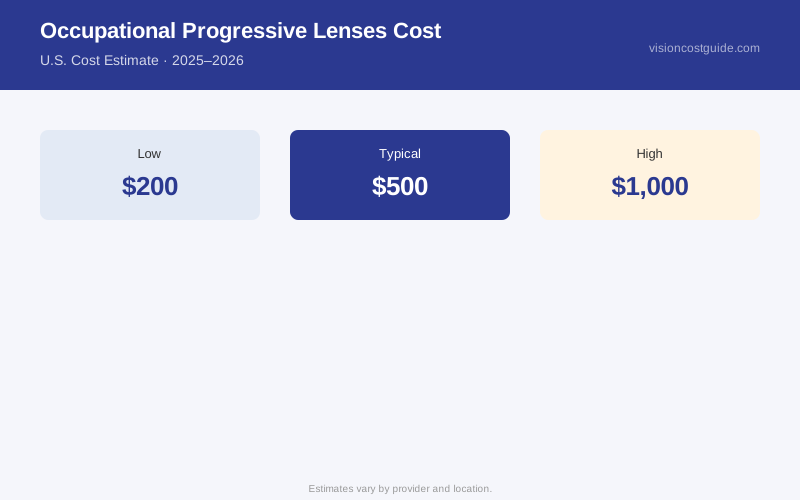
Most progressive lens wearers have one pair and use them for everything. That works fine — until it doesn’t. If you’re squinting at your monitor, cranking your chin up to find the intermediate zone, or getting neck pain after eight hours at a desk, you’re experiencing the core limitation of standard progressives at a workstation. That’s the exact problem occupational progressive lenses were designed to solve.
What Makes Occupational Progressives Different?
Standard progressive lenses optimize for distance vision at the top — the zone you use while walking and driving. The intermediate (arm’s length) and near (reading) zones are at the bottom third of the lens.
Occupational progressives flip that priority. They expand the intermediate and near zones across most of the lens, trading away the distance zone to give you more usable screen and reading area. You can’t drive in them — the distance zone is either absent or tiny. But at a desk, they’re dramatically more comfortable for most presbyopes.
The American Optometric Association’s 2024 workforce health data found that 58% of adults who use digital screens daily report eye strain symptoms. Occupational progressives directly address the ergonomic root cause.
Cost Breakdown
| Lens Type | Lens-Only Cost | Complete Pair (with frames) |
|---|---|---|
| Entry occupational progressive (Zeiss Officelens Near/Room) | $180–$280 | $300–$500 |
| Mid-range office progressive (Hoya Sync, Shamir Workspace) | $220–$380 | $380–$600 |
| Premium office progressive (Varilux Digitime, Zeiss Digital) | $350–$600 | $500–$900 |
| Computer single-vision (alternative option) | $80–$150 | $150–$300 |
Occupational progressives run $50–$150 more than standard progressives at the same quality tier. The premium is real, and so is the benefit for office-intensive wearers.
Three Variants: Near, Intermediate, Room
Occupational progressive lenses come in three focus configurations:
Near focus (“near” or “reading” variant): Optimized for 12–24 inch distances. Best for reading-intensive tasks — books, documents, close craft work. The working range is narrower. Cost: $180–$300 for lenses.
Intermediate focus (“desk” or “workstation” variant): Optimized for 16–32 inches — the typical computer screen distance. The most popular choice for office workers. Extended near range and wide intermediate, limited distance. Cost: $200–$350 for lenses.
Room focus (“room” variant): Extended range covering 20 inches to about 12 feet. Works for classroom teachers, meeting rooms, retail workers who move around a workspace. Sacrifices some reading sharpness for broader coverage. Cost: $220–$400 for lenses.
Ask your optician specifically which variant fits your work environment. Most people default to “intermediate” without discussing actual working distances — that conversation matters.
Anti-fatigue lenses (like Nikon SeeMax or Essilor Eyezen) are single-vision lenses with a small boost zone at the bottom to reduce accommodative demand. They cost $80–$180 — less than occupational progressives — and work well for people in their 30s–early 40s who haven’t developed full presbyopia but are experiencing screen fatigue.
If you’re fully presbyopic (can’t read at arm’s length without glasses), anti-fatigue lenses won’t give you the reading correction you need. Occupational progressives are the right tool.
Rule of thumb:
- Under 45, mild symptoms → anti-fatigue single vision, $80–$180
- 45+, clear presbyopia, desk-intensive work → occupational progressive, $200–$600
- Strong distance prescription + desk work → consider separate pairs for distance and desk
The “Two-Pair Strategy”: Occupational + Standard
Many presbyopes who work at computers do best with two pairs: standard progressives for driving and outdoor use, occupational progressives for desk and screen time. Some vision insurance plans allow benefits for two pairs in specific clinical circumstances — ask your provider.
Even without insurance support, a modest occupational progressive (~$250–$350 for lenses in budget frames) paired with a standard progressive can be more comfortable and less expensive than a single ultra-premium standard progressive that handles everything poorly.
Insurance Coverage
Most vision insurance plans don’t have a specific occupational progressive benefit — they cover “multifocal lenses” up to a standard allowance. Occupational progressives typically count as premium multifocal lenses, with upgrade copays of $50–$150 above the base benefit.
FSA and HSA funds cover occupational progressive lenses as qualified medical expenses. If you use your FSA/HSA to fund the upgrade, the effective out-of-pocket cost drops meaningfully.
Occupational progressive lenses are not safe for driving. The limited or absent distance zone means you won’t see clearly at traffic sign distances. Keep a pair of standard progressives or single-vision distance glasses for driving — and don’t wear your work progressives in the car. This distinction matters and should be explained clearly at dispensing; if your optician doesn’t bring it up, ask directly.
Is the Upgrade Worth It?
For someone who spends 6+ hours daily at a computer and is already presbyopic, occupational progressives typically pay back in physical comfort within days. Neck pain from chinning up to find the intermediate zone of standard progressives is a real occupational issue that contributes to musculoskeletal costs.
For a light computer user or someone still in early presbyopia, a standard progressive or anti-fatigue single-vision lens may be adequate and substantially cheaper.
If you spend most of your working day at a screen, you’re the target patient. At $200–$600, occupational progressives are a reasonable professional tool investment — treat them like ergonomic furniture for your eyes.