Zigzag lines. A shimmering arc. Part of your visual field temporarily goes dark. These are visual phenomena that most people call “ocular migraines” — but that term covers two very different conditions with significantly different medical implications and costs.
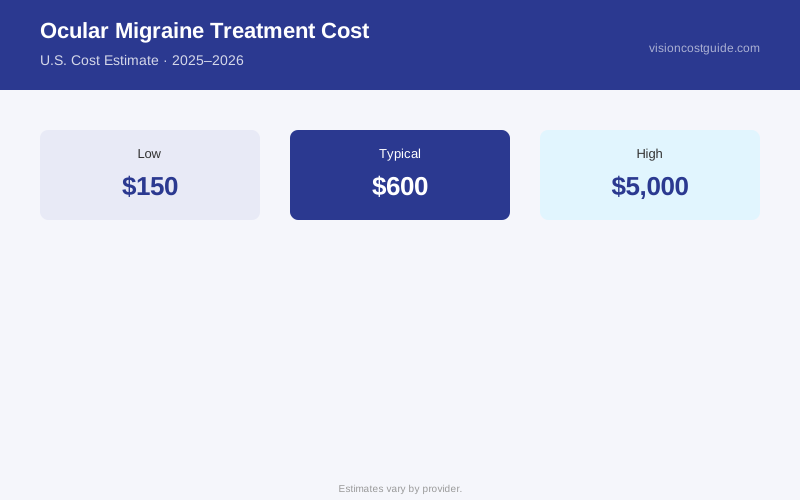
Understanding which one you have isn’t just academic. One is generally benign and self-resolving. The other can signal a transient ischemic attack. Getting the diagnosis right determines whether your workup costs $150 or $3,000.
The Two Conditions People Call “Ocular Migraine”
Visual aura (migraine with aura): The shimmering, zigzag scintillating scotoma that expands across your visual field and disappears in 20–30 minutes — typically followed by a headache, though not always. This is a cortical phenomenon in the visual processing areas of the occipital cortex. It affects both eyes simultaneously (because it’s in the brain, not the eye itself). It’s common: the American Migraine Foundation estimates that about 25–30% of migraine patients experience aura.
Retinal migraine (true ocular migraine): Temporary monocular visual loss — affecting one eye only — that resolves within an hour. True retinal migraine is rare, and its diagnosis requires ruling out other causes of transient monocular vision loss: carotid artery disease, giant cell arteritis, and ocular vascular occlusion are all on the differential. This is the version that warrants urgent workup.
What the Diagnostic Workup Costs
| Evaluation Step | Cost (Without Insurance) | When Ordered |
|---|---|---|
| Dilated eye exam with retinal evaluation | $100–$250 | First presentation |
| OCT (optical coherence tomography) | $100–$300 | Retinal evaluation for transient monocular loss |
| Visual field testing | $50–$150 | Aura pattern workup |
| Carotid artery duplex ultrasound | $300–$800 | Transient monocular loss — rule out carotid disease |
| MRI brain with contrast | $800–$2,500 | New or atypical aura; monocular loss |
| Neurology consultation | $200–$500 | Complex aura, first episode, or atypical features |
| Cardiac workup (echo, Holter) | $500–$2,000 | Embolic source screening for transient monocular loss |
Classic bilateral visual aura in a known migraineur with no new features? A straightforward optometry or ophthalmology visit to confirm there’s no retinal pathology is often sufficient — $100–$300 total.
First episode of transient monocular visual loss, especially in someone over 50, smoker, hypertensive, or with vascular risk factors? That’s an urgent workup — eye exam plus carotid imaging plus possibly MRI brain and neurology, adding up to $1,500–$5,000 or more.
Recognizing the Difference
The key clinical question: is it one eye or both?
Close one eye during the episode. Then close the other. If the visual disturbance is present only when one specific eye is open, it’s monocular — coming from that eye or its blood supply. If it appears with either eye closed (meaning it’s present with just the other eye), it’s binocular — coming from the brain. Most people can’t reliably perform this test during an acute episode, which is why the history you give your eye doctor matters enormously.
Seek same-day evaluation if your visual episodes include:
- Monocular (one-eye-only) visual loss lasting more than a few minutes
- First episode of any visual aura in someone over 50
- Visual loss accompanied by facial drooping, arm weakness, or speech difficulty (call 911)
- Aura symptoms that last longer than 60 minutes
- Visual disturbance after starting oral contraceptives or hormone therapy (estrogen significantly increases stroke risk in migraine-with-aura patients)
- Amaurosis fugax — a “curtain coming down” over vision — which classically suggests carotid embolic disease
Ongoing Treatment Costs
For classic migraine with visual aura, treatment focuses on migraine management — not eye-specific treatment. Options range from behavioral modifications to preventive medications.
Acute treatment (used during episodes):
- Sumatriptan (generic): $10–$30 per dose; available OTC in some formulations
- Other triptans (naratriptan, rizatriptan, almotriptan): $15–$60 per dose branded; $8–$20 generic
- OTC: ibuprofen + caffeine combination — often effective for mild-moderate aura migraines; ~$5/episode
Preventive medications (daily, for frequent migraines):
- Propranolol (generic): $10–$25/month
- Topiramate (generic): $15–$40/month
- Amitriptyline (generic): $10–$25/month
- CGRP antagonists (Aimovig, Ajovy, Emgality injections): $600–$900/month; covered by commercial insurance with prior authorization for chronic migraine
Specialist costs:
- Neurology follow-up: $150–$350/visit
- Botox for chronic migraine (31 injections, every 12 weeks): $1,000–$1,500 per session; covered by insurance with prior auth for chronic migraine (15+ days/month)
Migraine with aura is a significant independent risk factor for ischemic stroke in women under 45 — especially women who smoke and use combined oral contraceptives. The AAO and neurological associations recommend that women with migraine-with-aura avoid estrogen-containing contraceptives. This isn’t a minor advisory — the stroke risk combination is real. Discuss contraception alternatives with your OB-GYN or neurologist if you have migraine with visual aura.
Insurance Coverage
Eye exams and retinal evaluations triggered by visual symptoms are medically necessary and typically covered by medical insurance (not just vision insurance). Bill to your medical insurance, not your vision plan, for workup of new or changing visual symptoms — the allowed amount is higher and the clinical documentation codes are different.
MRI brain and carotid imaging are covered by medical insurance when ordered for a documented neurological symptom. Neurology consultation is covered as a specialist visit.
For ongoing migraine preventive therapy, commercial insurance covers CGRP antagonists with step-therapy requirements — you typically must have tried and failed 2–3 older preventives before insurers approve biologics.
Bottom Line
The cost of evaluating an “ocular migraine” ranges from $150 (classic bilateral aura, reassurance visit) to $5,000+ (transient monocular vision loss requiring full vascular workup). The difference hinges on one clinical detail: one eye or both. Bilateral shimmer and zigzag that resolves in 20–30 minutes is almost always benign cortical aura. Transient monocular visual loss is a potential emergency. When in doubt — especially with a first episode, vascular risk factors, or monocular symptoms — see an eye doctor or neurologist the same day.