The quote was $14,800 — and that was just for one eye.
That’s the kind of number people find in their patient portal after being told they need optic nerve sheath fenestration for idiopathic intracranial hypertension. The procedure sounds frightening. The cost seems impossible. And the condition itself — elevated pressure around the brain slowly damaging your optic nerve — gives you no time to comparison-shop.
Here’s the full picture: what optic nerve surgery costs, what drives those numbers, and how insurance actually handles it.
What Is Optic Nerve Surgery?
The optic nerve connects your eye to your brain. When it’s compressed, damaged, or under abnormal pressure, vision loss can progress quickly — sometimes permanently. Surgery on or around the optic nerve is performed to relieve that pressure, decompress orbital tissue, or remove growths affecting the nerve.
These aren’t elective procedures. They’re performed when other treatments have failed and vision is actively at risk. According to the National Eye Institute, idiopathic intracranial hypertension (IIH) — the most common driver of optic nerve sheath fenestration — affects an estimated 1 to 2 per 100,000 people in the general population, rising to 20 per 100,000 in obese women of childbearing age. Thyroid eye disease (Graves’ ophthalmopathy) affects roughly 25% of people with Graves’ disease, with serious orbital complications requiring decompression in a significant subset of those cases.
Types of Optic Nerve Surgery and Their Costs
| Procedure | Setting | Uninsured Cost | Insured Out-of-Pocket |
|---|---|---|---|
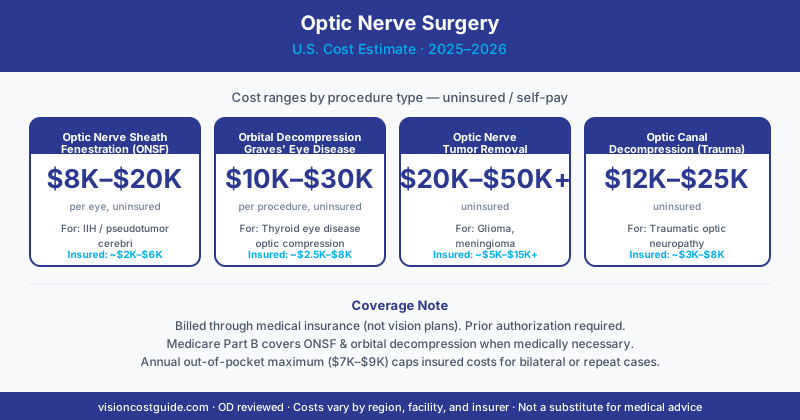
| Optic nerve sheath fenestration (ONSF) | Hospital OR | $8,000–$20,000 | $2,000–$6,000 |
| Orbital decompression (Graves') | Hospital OR | $10,000–$30,000 | $2,500–$8,000 |
| Optic nerve tumor removal | Tertiary center | $20,000–$50,000+ | $5,000–$15,000+ |
| Optic canal decompression (traumatic) | Hospital OR | $12,000–$25,000 | $3,000–$8,000 |
Optic Nerve Sheath Fenestration (ONSF)
ONSF is the most common optic nerve procedure for IIH. The surgeon makes small incisions in the sheath — the tissue sleeve surrounding the optic nerve — to allow excess cerebrospinal fluid to drain away from the nerve. It’s done under general anesthesia, typically takes one to two hours, and requires one to three days of hospital observation.
Total cost ranges from $8,000 to $20,000 per eye without insurance. That figure includes surgeon’s fee ($3,000–$7,000), facility fee ($4,000–$10,000), anesthesia ($1,000–$2,500), and pre-operative imaging. Repeat procedures — needed in about 15–20% of cases when pressure recurs — add to the lifetime cost.
Orbital Decompression for Thyroid Eye Disease
When Graves’ ophthalmopathy causes the tissues behind the eye to swell, the optic nerve gets compressed inside its bony canal. Orbital decompression surgery removes portions of the bony orbital walls to give those tissues room to expand outward rather than press on the nerve.
Costs run $10,000–$30,000 depending on the extent of decompression needed (one wall vs. two walls vs. three walls), surgical approach (endoscopic vs. open), and whether one or both eyes are involved. This procedure often requires an oculoplastic or facial surgeon with subspecialty training, which concentrates cases at academic medical centers and tertiary referral hospitals where facility fees are higher.
Optic Nerve Tumor Removal
Optic nerve gliomas (most common in children) and optic nerve sheath meningiomas (most common in middle-aged women) can require surgical intervention when they threaten the nerve’s function or extend into the brain. These are the most complex and expensive procedures in this category — $20,000 to $50,000 or more — and are typically performed by a neurosurgeon and an ophthalmologist working together at a major academic center. Some meningiomas are instead treated with stereotactic radiation rather than open surgery, which costs $15,000–$35,000 but avoids the surgical risks.
Optic Canal Decompression After Trauma
Traumatic optic neuropathy — where a head or orbital injury bruises or compresses the optic nerve inside its bony canal — occasionally requires surgical decompression when high-dose steroids don’t restore vision. It’s less common than the other indications. Costs are similar to ONSF: $12,000–$25,000 for the procedure plus associated trauma and imaging costs.
What Drives the Price Range
The biggest cost lever is where the surgery happens. Major academic medical centers and tertiary eye hospitals — Massachusetts Eye and Ear, Wills Eye Hospital, Bascom Palmer — are the centers of expertise, but their facility fees are correspondingly high. A community hospital or ambulatory surgery center in a smaller market may quote 20–40% less for the same procedure.
Surgeon subspecialization matters too. ONSF requires a surgeon trained specifically in orbital and optic nerve surgery — not every ophthalmologist performs it. The supply of qualified surgeons is limited, which keeps fees higher than for common procedures like cataract surgery.
Bilateral vs. unilateral surgery doubles some costs (surgeon time, anesthesia, OR time) but not others (pre-op workup, recovery room). Expect bilateral procedures to cost 60–80% more than unilateral, not double.
Insurance Coverage: The Critical Details
Every optic nerve surgery covered by insurance is billed through your medical plan — not your vision plan. Vision insurance (VSP, EyeMed, Davis Vision) covers glasses, contacts, and routine exams. It does not cover surgical procedures. If you’re enrolled in both types of plans, your ophthalmologist bills your medical carrier first and vision plan second for any eligible remaining costs.
Medical insurance coverage depends on two things: documented medical necessity and prior authorization. Insurers won’t cover optic nerve surgery unless the medical record clearly shows the condition (IIH documented by lumbar puncture pressure readings, thyroid eye disease with orbital imaging, etc.) and the surgical indication (failed non-surgical treatment, progressive vision loss on visual field testing).
What you’ll typically owe with insurance:
- Deductible: $1,000–$3,500 (often already partially met if you’ve had imaging, specialist visits, and failed medical management)
- Out-of-pocket maximum: most major plans cap annual out-of-pocket at $7,000–$9,000 individual
- After hitting your OOP max, you owe nothing for the rest of the calendar year — relevant if you need bilateral surgery or a repeat procedure
Medicare Part B covers both ONSF and orbital decompression when the surgical indication is documented. The Part B deductible ($257 in 2026) applies, plus 20% coinsurance after the deductible. With a Medicare supplement (Medigap) plan, most or all of that coinsurance is covered. Medicare Advantage plans vary — check your plan’s prior authorization requirements before scheduling.
Watchful Waiting vs. Surgery: When Is the Threshold?
Surgery isn’t the first step in most of these conditions. For IIH, the typical progression is:
- Diagnosis confirmed by lumbar puncture (opening pressure >25 cm H₂O)
- Weight loss counseling and acetazolamide (Diamox) to reduce CSF pressure
- Monthly visual field testing to monitor for progression
- If visual fields are stable — continue medical management
- If visual fields worsen despite treatment — surgery is indicated
Most patients with IIH never reach the surgical threshold. The American Academy of Ophthalmology notes that surgical intervention is reserved for cases with progressive visual field loss, fulminant IIH at presentation, or patients who can’t tolerate medication side effects. The same logic applies to thyroid eye disease: most patients are managed through the active inflammatory phase with observation, lubricants, and prism glasses before orbital decompression is considered.
If you’re being told you need surgery, it’s because the non-surgical options haven’t been sufficient. But getting a second opinion at a subspecialty center is appropriate — and most good surgeons welcome it for this type of case.
The Cost of Not Acting
Here’s what’s worth understanding about optic nerve conditions: visual field loss from optic nerve damage is often permanent. Unlike optic neuritis — where vision frequently recovers naturally — chronic optic nerve compression from IIH or Graves’ disease causes cumulative, irreversible damage if pressure isn’t relieved.
The economic calculation isn’t only surgery vs. no surgery. It’s surgery now vs. progressive vision loss that may require lifelong low vision rehabilitation, costly visual aids, and potentially legal blindness — with all the associated disability costs. For patients with documented progression, the surgery often pays for itself in avoided long-term costs and maintained quality of life.
Seek same-day emergency care if you experience: sudden significant vision loss in one or both eyes, complete loss of color vision, visual field loss progressing over hours rather than weeks, or severe headache with vision changes. These can indicate acute optic nerve compression or other emergencies where hours matter. Don’t wait for a scheduled appointment — go to an emergency eye clinic or hospital ED immediately. Related: retinal detachment surgery has a similar urgency profile.
Reducing Out-of-Pocket Costs
Use your deductible year strategically. If you’re diagnosed with IIH in October and surgery is likely but not yet urgent, consider whether scheduling in January (new deductible year) or December (potentially deductible already met) makes financial sense. Discuss timing with your surgeon — a few weeks won’t change outcomes if the condition is stable.
Academic center vs. community hospital: Academic centers have the most experienced surgeons for rare procedures, but community hospitals credentialed to perform these surgeries can charge significantly less. If you’re being referred to a high-cost center primarily for specialty volume, ask whether a surgeon at a lower-cost facility has comparable experience.
Patient assistance programs: The American Academy of Ophthalmology’s EyeCare America program provides referrals to ophthalmologists who provide care at no out-of-pocket cost to qualifying seniors and at-risk populations. For patients with Graves’ disease, the Graves’ Disease and Thyroid Foundation can connect patients with financial resources and specialist referrals.
Also compare costs associated with managing your baseline condition: glaucoma treatment and optical coherence tomography are often part of the ongoing monitoring picture for optic nerve patients.
Bottom Line
Optic nerve surgery costs $8,000–$30,000 out of pocket without insurance, with most insured patients paying $2,000–$8,000 after deductibles and coinsurance. It’s covered by medical insurance — not vision plans — when medically necessary. The cost is significant, but for patients whose vision is actively deteriorating, it’s the surgery that preserves what can’t be replaced.
If you’re at this stage, the most important things you can do right now are document your visual field tests carefully, confirm your insurance prior authorization before scheduling, and make sure you’re being seen by a surgeon who performs this specific procedure routinely.
Frequently Asked Questions
Optic nerve surgery costs vary widely by procedure: optic nerve sheath fenestration (ONSF) runs $8,000–$20,000 without insurance; orbital decompression for optic nerve compression costs $10,000–$30,000. Most procedures are covered by medical insurance (not vision insurance) when medically necessary, bringing out-of-pocket costs to $2,000–$8,000 after deductibles.
Yes — optic nerve surgery is covered by medical insurance (not vision plans) when medically necessary. Medicare Part B covers optic nerve sheath fenestration and orbital decompression when documented conditions like idiopathic intracranial hypertension (IIH) or Graves' ophthalmopathy are present. Prior authorization is typically required. Out-of-pocket with Medicare runs $1,500–$5,000 depending on your supplement plan.
The most common conditions requiring optic nerve surgery are idiopathic intracranial hypertension (IIH/pseudotumor cerebri), optic nerve compression from Graves' ophthalmopathy (thyroid eye disease), optic nerve tumors, and traumatic optic neuropathy. Surgery is typically considered only when vision is threatened and non-surgical options (medication, weight management) haven't controlled progression.