Here’s something most cataract surgery brochures don’t say plainly: insurance pays for the surgery. It doesn’t pay for independence from glasses. If you want to read your phone, see the dashboard, and drive at night without reaching for a pair of readers — that’s the upgrade. The PanOptix trifocal lens is the most widely implanted premium IOL in the US for that purpose, and understanding its cost structure helps you decide whether the upgrade makes sense for your life.
What PanOptix Costs and What’s Included
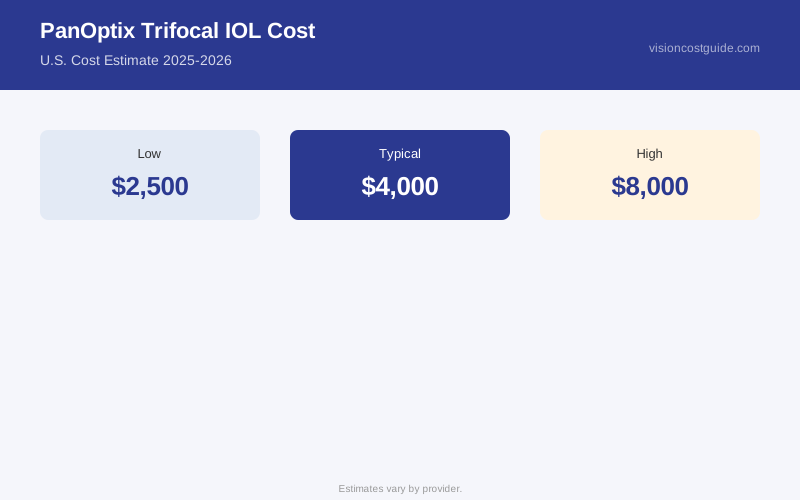
The PanOptix upgrade fee — what you pay out of pocket above what insurance covers — typically runs $2,500–$4,500 per eye, depending on the surgeon, facility, and whether femtosecond laser assistance is added.
| What You Pay | Cost Range | Notes |
|---|---|---|
| Standard cataract surgery (insurance covers) | $0–$500 copay/deductible | Medicare Part B: 20% coinsurance |
| PanOptix lens upgrade (patient pays) | $2,500–$4,500 per eye | Not covered by Medicare or commercial |
| Add FLACS (optional laser assist) | +$1,000–$2,000 per eye | Also patient pay |
| Both eyes, lens upgrade only | $5,000–$9,000 total | Most patients do both eyes |
| Both eyes, lens + laser | $7,000–$13,000 total | High end of premium cataract packages |
The ASRS (American Society of Retina Specialists) and ASCRS member surveys consistently show PanOptix as the most implanted trifocal IOL in the US market since its FDA approval in 2019. Alcon’s own data from clinical trials showed 99% of patients would choose the same lens again — though manufacturer-sponsored trials have selection bias baked in.
What “Trifocal” Actually Means for Your Vision
A monofocal IOL (what insurance pays for) gives you sharp vision at one distance — typically set to distance. You’ll need reading glasses for near tasks. A trifocal IOL uses a diffractive optical design to split incoming light into three focal zones: distance (~20 feet+), intermediate (~24 inches, computer/dashboard distance), and near (~14 inches, phone/reading distance).
The tradeoffs are real:
- Halos and glare at night — particularly around lights when driving. They diminish significantly in the first 3–6 months as the brain adapts (neuroadaptation), but some patients notice them long-term.
- Reduced contrast sensitivity in low-light conditions compared to monofocal lenses.
- Near-complete spectacle freedom for most activities — the FDA clinical trial showed ~80% of patients didn’t need glasses for any distance after bilateral PanOptix implantation.
- Active lifestyle requiring vision at all distances (driving, computer use, reading without reaching for glasses)
- Willing to tolerate an adjustment period for night halos (6–12 weeks common)
- Less than 1.0–1.5D of corneal astigmatism (or pairing with a toric PanOptix version)
- No significant dry eye, macular disease, or irregular cornea
- Realistic about outcomes — some patients still need glasses for demanding near tasks
- Motivated to avoid progressive glasses for decades after surgery
PanOptix vs. Other Premium IOL Options
| IOL Type | Brand Example | Patient Upgrade Cost | Strengths | Weaknesses |
|---|---|---|---|---|
| Trifocal | PanOptix | $2,500–$4,500/eye | Strong near + intermediate + distance | Halos/glare; contrast reduction |
| EDOF (extended depth of focus) | Symfony, Vivity | $2,000–$3,500/eye | Excellent intermediate; fewer halos | Near vision weaker than trifocal |
| Accommodating | Crystalens | $1,500–$2,500/eye | Natural-looking vision | Near vision often disappoints |
| Light-adjustable lens | RxSight LAL | $2,500–$4,000/eye | Post-surgical power fine-tuning | Requires UV protection visits |
| Monofocal (insurance standard) | Many brands | $0 upgrade | Crisp distance; fewer dysphotopsias | Reading glasses required |
The Vivity (Alcon’s EDOF lens) has gained popularity among patients with higher halos sensitivity or those with mild macular disease who want a premium lens with lower dysphotopsia risk. It doesn’t provide as strong a near point as PanOptix but suits many patients who primarily need distance and computer distance.
Financing Options
Most cataract surgery centers offer financing for the premium lens upgrade through CareCredit or Alpheon Credit. A $4,500 bilateral upgrade ($9,000 total) on a 24-month promotional financing plan runs approximately $375/month with deferred interest. If you pay it off within the promotional period — usually 12–24 months — no interest accrues.
HSA and FSA funds can be used toward the premium upgrade cost even though insurance doesn’t cover it, because cataract surgery is a qualified medical expense. The lens upgrade portion qualifies as well.
Informed consent matters enormously with premium IOLs. Some patients genuinely struggle with trifocal halos and experience significant dissatisfaction. Before committing, ask your surgeon: “What percentage of your PanOptix patients are satisfied at 6 months?” and “What happens if I’m not satisfied?” Most experienced premium IOL surgeons have a protocol for dissatisfied patients — sometimes including lens exchange. Understanding that protocol before surgery is more valuable than any marketing brochure.
Bottom Line
PanOptix trifocal IOL upgrade costs $2,500–$4,500 per eye — not covered by Medicare or insurance, which pays for the surgery itself. For both eyes, budget $5,000–$9,000 in out-of-pocket costs, or $7,000–$13,000 if laser assistance is added. The lens delivers strong spectacle independence for most patients, but requires a neuroadaptation period for night halos. Compare it against EDOF options like Vivity if night vision quality is a priority. The right lens depends on your visual demands, corneal health, and tolerance for the adjustment period — not just the price.