Here’s a sobering number: roughly 7.7 million Americans have diabetic retinopathy — and about 650,000 of them have the severe, proliferative form that threatens their sight. If you or someone you care about has been referred for panretinal photocoagulation (PRP), you’re probably wondering what it’s going to cost and whether your insurance will pick up the tab.
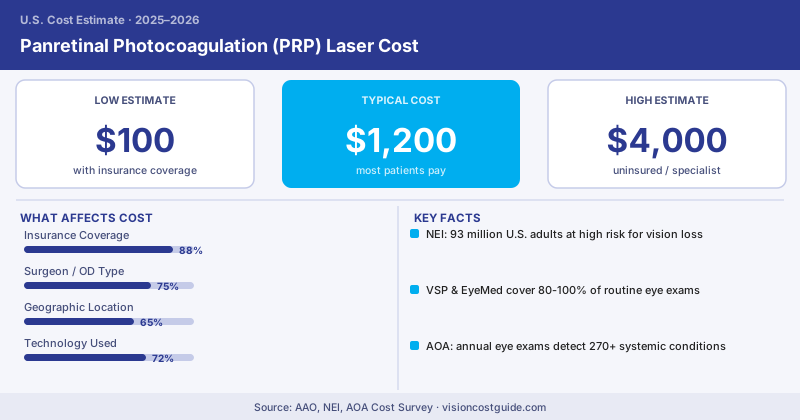
Short answer: $500–$4,000 per session without insurance. With Medicare or a commercial health plan, most patients owe $100–$800. And because PRP is definitively medically necessary — it reduces the risk of severe vision loss by 50%, according to the Diabetic Retinopathy Study — coverage is rarely in dispute.
What Is Panretinal Photocoagulation?
PRP is a laser treatment for proliferative diabetic retinopathy (PDR) and severe non-proliferative diabetic retinopathy (NPDR). During the procedure, a retina specialist uses a laser to create hundreds to thousands of small burns across the peripheral retina. This sounds alarming, but the goal is to destroy oxygen-deprived tissue that’s triggering the growth of fragile new blood vessels (neovascularization). Eliminating those vessels reduces the risk of vitreous hemorrhage and tractional retinal detachment — the two main causes of blindness from PDR.
The National Eye Institute (NEI) reports that early laser treatment reduces the risk of severe vision loss from proliferative diabetic retinopathy by about 95% in patients with high-risk characteristics. That’s one of the strongest evidence bases of any ophthalmic procedure.
PRP Laser Cost Breakdown
| Scenario | Typical Cost |
|---|---|
| Medicare Part B (with Medigap) | $50–$150 per session |
| Medicare Part B (no Medigap) | $150–$500 per session |
| Commercial insurance | $100–$800 per session |
| Self-pay, in-office retina specialist | $800–$2,500 per session |
| Self-pay, ambulatory surgery center | $1,500–$4,000 per session |
| Multiple sessions (3–4 total, common) | $2,400–$16,000 total self-pay |
PRP is often performed in 1–3 sessions spaced weeks apart. Each session treats a different quadrant of the retina to minimize swelling. Budget accordingly — the total treatment course may cost 2–3x a single session.
Insurance and Medicare Coverage
PRP falls squarely in the medical benefit category. CPT codes for laser photocoagulation (67228 for extensive treatment, 67210 for focal) are well-recognized by all major insurers.
- Medicare Part B: Covers 80% after the Part B deductible. Since most PRP patients are older adults with diabetes, Medicare is the payer for a large share of procedures.
- Commercial insurance: Aetna, BCBS, Cigna, and UnitedHealthcare all cover PRP under medical necessity criteria that are easy to meet with a diagnosis of PDR or severe NPDR.
- Medicaid: Generally covered; prior authorization varies by state.
Retina practices often bill separately for the professional fee (the retina specialist) and the facility/equipment fee (if performed at an ASC or hospital). If you’re self-pay, ask your retina practice whether they can do the treatment in-office — many can, and it’s significantly cheaper than an ASC setting.
What Affects the Price?
Number of sessions needed: Mild cases may be treated in one session. High-risk PDR often requires 2–4 sessions with 1,500–2,000 burns total. More sessions = more cost.
One eye or two: PDR frequently affects both eyes. Each eye has its own procedure and its own copay/coinsurance. If you need bilateral treatment, your annual out-of-pocket maximum may be your real cap.
Retina specialist fees: Academic medical centers with retina fellowship programs and high-volume private retina practices differ in their fee schedules. In major metro areas, fees run 30–50% higher than in smaller cities.
Combined with anti-VEGF injections: Many patients receive both intravitreal anti-VEGF injections (Eylea, Avastin, Lucentis) and PRP laser — the two complement each other for proliferative disease. Budget for both if your retina specialist recommends combination therapy.
What to Expect During the Procedure
PRP is done in the office using a laser delivered through a special contact lens placed on your eye after numbing drops. You’ll see bright flashes of light with each pulse. The procedure takes 20–45 minutes per session depending on the number of burns needed.
After treatment:
- Vision may be blurry for a few hours to a day.
- You might notice reduced peripheral (side) vision — this is expected and is the trade-off for preserving central vision.
- Sensitivity to light is common for a day or two.
- No patch is required, but avoid strenuous activity for 24 hours.
PRP permanently reduces peripheral vision to some extent. Most patients don’t notice it in daily life, but you should know this before treatment. Don’t skip PRP because of this trade-off — untreated proliferative diabetic retinopathy leads to far more devastating vision loss. Always discuss the risk-benefit balance with your retina specialist.
Controlling Diabetes Reduces the Need for PRP
This may be the most important cost-control tip of all: tight blood sugar management can slow diabetic retinopathy progression and reduce the likelihood you’ll need repeated laser treatments. The DCCT/EDIC trial, one of the landmark diabetes studies, showed that intensive blood sugar control reduced the development of retinopathy by 76% in Type 1 diabetic patients.
Every dollar spent on diabetes management — whether A1c testing, medication adherence, or endocrinology visits — potentially saves thousands in retinal laser and injection treatments down the road.
Bottom Line
PRP laser is a highly effective, well-covered procedure for proliferative diabetic retinopathy. With Medicare or commercial insurance, your out-of-pocket per session is typically $150–$800. Self-pay patients face $800–$2,500 per session in-office, or up to $4,000 at an ASC. Most patients need 2–3 sessions, so plan for the full course. If you have diabetes, don’t skip your annual dilated eye exam — catching retinopathy early means fewer laser sessions and better outcomes.