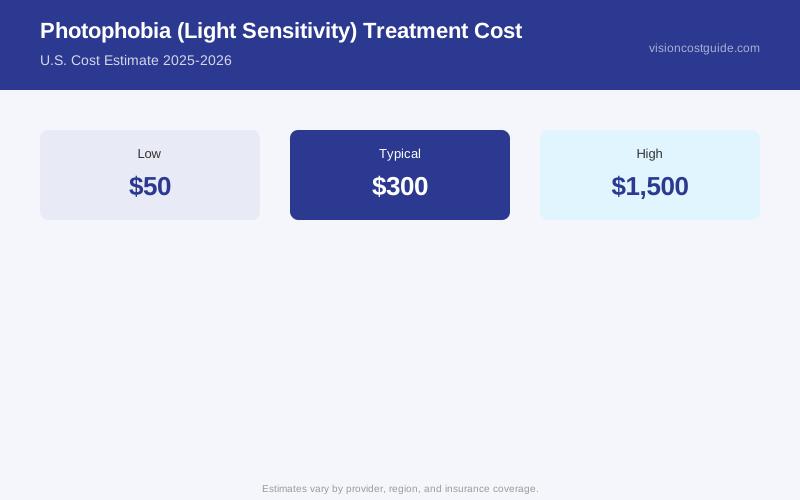
42% of migraine sufferers report photophobia as one of their most disabling symptoms, according to a 2018 study published in Cephalalgia — and yet most of them manage it with drugstore sunglasses and a dark room. That’s not treatment. That’s avoidance. Real treatment costs money, but it also costs far less than most people expect once they understand what’s actually driving the light sensitivity.
Photophobia isn’t a disease — it’s a symptom. Getting the diagnosis right is what determines whether you spend $50 or $3,000.
Why Light Sensitivity Happens
Your eyes translate light into nerve signals via the retina and optic nerve. When those structures are inflamed, damaged, or overwhelmed, ordinary light becomes painful. The most common causes:
- Dry eye disease — the exposed corneal surface becomes hypersensitive
- Migraine — trigeminal nerve sensitization during attacks, sometimes persistent
- Anterior uveitis — inflammation inside the eye causes extreme light sensitivity
- Corneal abrasion or infection — exposed nerve endings react to any light
- Iritis/cyclitis — autoimmune or infectious inflammation of the iris and ciliary body
- Meningitis — medical emergency; photophobia + headache + neck stiffness requires immediate ER visit
- Concussion/TBI — post-concussive photophobia can persist for months
- Medication side effects — tetracyclines, antihistamines, some blood pressure drugs
- Contact lens over-wear — hypoxic response causes acute photosensitivity
The Diagnostic Workup
| Evaluation | Cost | Identifies |
|---|---|---|
| Comprehensive eye exam | $100–$250 | Anterior segment inflammation, corneal issues, IOP |
| Slit-lamp exam | Included in eye exam | Corneal abrasions, iritis signs |
| Tear osmolarity test | $30–$75 | Dry eye severity |
| Meibography | $75–$150 | MGD as dry eye driver |
| Neurology consult | $250–$600 | Migraine diagnosis, TBI assessment |
| MRI brain | $500–$2,500 | CNS causes, optic nerve issues |
| Lab work (ANA, HLA-B27) | $100–$400 | Autoimmune uveitis workup |
A comprehensive eye exam is always the first stop. An eye doctor can see iritis, corneal damage, and elevated eye pressure within minutes of the slit-lamp exam — findings that narrow the diagnostic path significantly.
If the eyes look healthy on exam but light sensitivity persists, the cause is likely neurological. Migraine workup with a neurologist typically runs $250–$600 for the initial consultation. If TBI is suspected, imaging adds $500–$2,500 depending on facility and insurance status.
Treatment Costs by Cause
Dry Eye-Related Photophobia: $20–$4,000
Dry eye causes photophobia because an unstable tear film leaves the corneal surface exposed between blinks. Every light source scatters differently across the irregular surface.
Treatment follows the dry eye cost ladder:
- Preservative-free artificial tears: $15–$30/month
- Prescription cyclosporine (generic) or Xiidra: $200–$600/month
- LipiFlow or IPL for MGD: $1,500–$4,000 (one-time or periodic)
Many patients see photophobia resolve completely with consistent dry eye treatment.
Migraine-Related Photophobia: $50–$500+/month
Interictal photophobia (light sensitivity between migraine attacks) affects a significant subset of chronic migraine patients. Treatment involves:
- Tinted glasses (FL-41 tint specifically): $100–$350 per pair — FL-41 is a rose-colored precision tint with research backing for migraine photophobia
- Migraine prevention medications: $30–$200/month (propranolol, topiramate, amitriptyline)
- CGRP antagonist injections (Aimovig, Ajovy, Emgality): $600–$800/month before insurance, often $0–$50 with manufacturer copay cards
- Botox for chronic migraine: $300–$800 per session (every 12 weeks), often covered by insurance for chronic migraine diagnosis
Standard dark sunglasses help during attacks but can worsen light sensitivity long-term by dark-adapting the visual system. FL-41 tinted lenses (a specific rose-amber filter) have been studied in peer-reviewed research since the 1990s and reduce photophobia in migraine patients without the dark-adaptation problem. They’re available from specialty optical labs and some online retailers. Expect to pay $150–$350 for prescription FL-41 lenses. Non-prescription versions cost $30–$80 and work for trial before investing in prescription lenses.
Uveitis/Iritis: $200–$2,000+ per episode
Anterior uveitis (iritis) causes intense photophobia because inflamed iris tissue spasms in response to light. Treatment is urgent:
- Topical corticosteroid eye drops (prednisolone acetate): $30–$150/month
- Cycloplegic drops to dilate the pupil and prevent spasm: $20–$50
- Ophthalmologist monitoring visits: $100–$250 each, weekly initially
- Systemic workup for underlying autoimmune cause: $300–$800 in labs and specialist visits
Recurring uveitis may require oral immunosuppression ($50–$200/month) or biologic therapy ($15,000–$40,000/year) for severe autoimmune cases.
Post-Concussive Photophobia: $200–$2,000
Post-concussive photophobia often resolves with time and protected light exposure therapy. Treatment costs:
- Neurologist or neuro-ophthalmologist consultation: $250–$600
- Vision therapy for convergence/accommodation issues post-TBI: $200–$600/month
- FL-41 tinted lenses: $150–$350
If photophobia develops suddenly alongside a severe headache, fever, stiff neck, or confusion, go to the emergency room immediately. These symptoms together can indicate bacterial meningitis — a life-threatening emergency. Don’t call your eye doctor’s office; call 911 or go to the nearest ER.
What Insurance Covers
Dry eye treatment: vision insurance covers the exam; medical insurance may cover prescription drops after prior authorization.
Migraine treatment: medical insurance covers neurologist visits, migraine prevention drugs (with step therapy), and Botox for confirmed chronic migraine (15+ headache days/month). CGRP biologics typically require prior authorization and documented failure of 2+ preventives.
Uveitis: billed through medical insurance, not vision insurance. Ophthalmologist visits for uveitis management go through medical — make sure you’re not filing under vision insurance for medical eye conditions.
Practical First Steps
Before spending money on specialty testing, try preservative-free artificial tears four times a day for two weeks. If your photophobia improves measurably, dry eye is likely a significant contributor — and treatment is cheap. If there’s no change, you need a comprehensive exam to look for other causes.
Write down your photophobia pattern before your appointment: Is it worst indoors under fluorescent light? Outside on bright days? During headaches specifically? Constant or intermittent? This history genuinely changes the diagnostic path and prevents unnecessary testing.
The good news: most photophobia is treatable. The frustrating part is that it often takes a proper diagnosis first — which means spending $100–$250 on an eye exam before spending anything on treatment. That exam is the most cost-efficient thing you can do.