“Do you want to be dilated today?” — most people say no because they don’t want to leave with blurry vision and light sensitivity. But the back of your eye — the retina, optic nerve, and macula — is only fully visible through a dilated pupil. Skipping dilation doesn’t save you much; missing early retinal disease can cost considerably more.
What Dilation Actually Does
Dilation drops (typically tropicamide 1% and/or phenylephrine 2.5%) temporarily relax the iris muscle, expanding the pupil from its normal 3–5mm diameter to 6–9mm. That larger aperture gives your eye doctor an unobstructed view of the peripheral retina, the optic nerve head in three dimensions, and the macula — the critical central retina responsible for reading and face recognition.
Without dilation, only the central 10–15 degrees of the retina is visible through an undilated pupil. The peripheral retina — where most retinal tears and detachments begin — is hidden.
The CDC estimates that about 93 million Americans are at high risk for serious vision loss, yet only 50% visited an eye doctor in the prior year. Comprehensive dilated exams are the primary way to detect diabetic eye disease, glaucoma, and macular degeneration before significant vision loss occurs — all conditions where early detection dramatically changes outcomes.
Cost of a Dilated Eye Exam
| Scenario | Typical Cost |
|---|---|
| Dilation bundled into comprehensive exam | $0 additional (included in exam fee) |
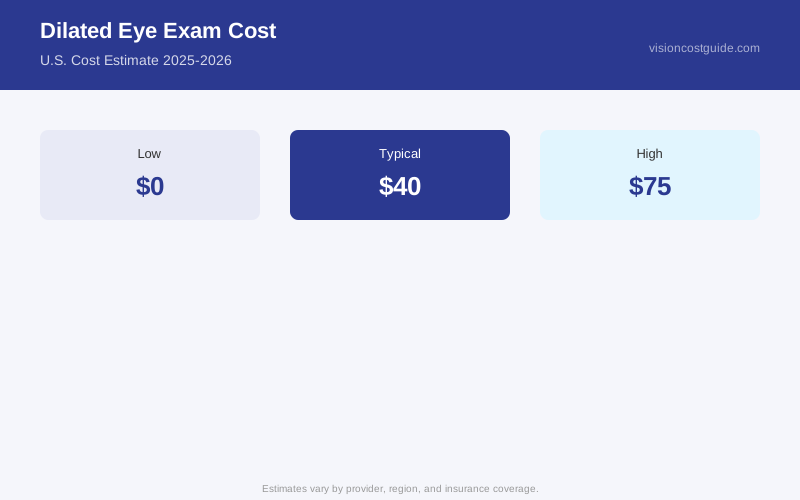
| Dilation billed as separate add-on | $25–$75 |
| Full comprehensive dilated exam (no insurance) | $100–$250 |
| Medicare-covered dilated exam | $0–$40 patient cost after 80% coverage |
| Glaucoma screening (high-risk, Medicare) | $0 (free annual benefit) |
| Urgent/emergency dilated evaluation | $150–$350 including facility fees |
Whether dilation is billed separately depends on the practice and your insurance. Many ophthalmology practices include it as part of a comprehensive exam (CPT 92004 or 92014) at no additional charge. Some optometry practices bill it as an add-on diagnostic procedure. If you’re unsure, ask before the appointment whether dilation is included in the quoted exam fee.
When Dilation Is Medically Required
You can’t opt out of dilation in these situations without compromising the adequacy of your care:
Diabetes: The American Diabetes Association recommends annual dilated eye exams for all diabetic patients. Diabetic retinopathy is detectable through dilation before it causes any symptoms. The ADA’s 2024 Standards of Care in Diabetes state that early detection and treatment can reduce the risk of severe vision loss from diabetic retinopathy by 95%.
Established glaucoma: Optic nerve evaluation requires stereoscopic examination through a dilated pupil. The optical coherence tomography scan of the nerve fiber layer doesn’t replace a direct examination of the optic nerve cup and rim. The AAO’s glaucoma preferred practice pattern specifies dilated examination as part of every comprehensive glaucoma evaluation.
Macular degeneration: Monitoring for conversion from dry to wet AMD requires clear visualization of the macula and peripheral retina. Drusen distribution, geographic atrophy boundaries, and subtle subretinal fluid require dilation to assess accurately.
New floaters or flashes: Sudden onset of floaters or light flashes is a possible symptom of a retinal tear or detachment. This is an urgent indication — you need same-day dilated examination to rule out a peripheral retinal tear.
Children’s first comprehensive exam: Detecting amblyopia risk factors (refractive errors, strabismus) and assessing the optic nerve and retina requires dilation.
What Dilation Reveals That Nothing Else Can
| Condition | Why Dilation Is Needed |
|---|---|
| Peripheral retinal tears | Located far in peripheral retina, invisible through undilated pupil |
| Early diabetic retinopathy | Microaneurysms and hemorrhages in peripheral macula and mid-periphery |
| Optic nerve cupping (glaucoma) | Stereoscopic disc examination requires dilated view |
| AMD drusen distribution | Full macula and surrounding area assessment |
| Vitreous degeneration | Posterior vitreous detachment evaluation |
| Retinal vein/artery occlusions | Flame hemorrhages, disc edema |
| Choroidal melanoma | Peripheral choroidal mass evaluation |
How Long Dilation Lasts — and Managing the Side Effects
Tropicamide (the most common dilation drop) lasts 3–6 hours for most people. During that time:
- Reading and near vision are blurry (the drops also temporarily paralyze the focusing muscle)
- Bright light is uncomfortable — wear sunglasses
- Driving can be done by most people in 1–3 hours, but some people prefer to arrange a ride
Longer-lasting dilation drops (atropine, cyclopentolate) used for cycloplegic refractions in children last 12–24 hours or more. Standard tropicamide used for routine adult examinations clears faster.
Optomap ultra-widefield retinal imaging captures up to 82% of the retinal surface without dilation in a single photograph. Many practices offer it as an alternative to dilation for patients who can’t tolerate it or won’t consent to drops.
The optomap retinal exam typically adds $39–$59 to your exam cost. It’s useful for documentation and screening but doesn’t allow the stereoscopic optic nerve evaluation that dilation provides. For patients with diabetes, glaucoma, or macular degeneration, dilation remains the preferred standard — optomap supplements but doesn’t fully replace it in high-risk patients.
Insurance and Medicare Coverage
Vision insurance (VSP, EyeMed, Davis Vision): Comprehensive eye exams include dilation — it’s not a separate benefit. If your plan covers a comprehensive exam, dilation is covered as part of that exam.
Medicare Part B: Covers a comprehensive dilated eye exam for patients with diabetes once per year (CPT 92004 with diabetes diagnosis). For established glaucoma patients, covers follow-up exams including dilation. The Medicare glaucoma screening benefit covers one annual exam (including dilation) for high-risk beneficiaries at no cost.
Medical insurance: When a dilated exam is ordered by a physician for a medical diagnosis (diabetic retinopathy, glaucoma, AMD, etc.), it typically falls under medical insurance rather than vision insurance. Co-pays and deductibles apply per your plan.
Angle-closure glaucoma is a rare but serious contraindication to dilation. Patients with a history of angle-closure glaucoma or very shallow anterior chambers may experience an acute pressure spike from dilation drops. Tell your eye doctor if you’ve been warned about narrow angles in the past. Most patients with treated angle closure (after laser iridotomy) can be safely dilated, but this should be discussed with your ophthalmologist. Routine dilation in patients without angle issues is extremely safe — serious adverse events are extremely rare.
Bottom Line
A dilated eye exam adds $0–$75 to your base eye exam cost — often nothing if it’s bundled, and usually covered by insurance for medically necessary indications. The two-minute discomfort of drops and three to six hours of light sensitivity is a reasonable trade for clear visualization of the entire retina and a thorough optic nerve assessment. If your eye doctor recommends dilation and you’ve been declining, reconsider — the peripheral retina is where disease starts silently, and it’s invisible without dilation.