The diagnosis lands fast: sudden blurry vision in one eye, sometimes overnight, and a retina specialist tells you one of the tiny veins in your retina has clotted. Retinal vein occlusion — RVO — is the second most common retinal vascular disorder after diabetic retinopathy. It affects roughly 16 million people worldwide. Treatment keeps the vision you have. Untreated, macular edema from RVO can permanently damage central vision within months.
Understanding treatment costs upfront helps you plan — because this isn’t a one-and-done procedure. It’s a multi-year commitment.
Types of RVO and How They Differ
Branch retinal vein occlusion (BRVO) involves one of the smaller tributary veins. Prognosis is generally better — many BRVO cases resolve partially on their own, and vision recovery is more common.
Central retinal vein occlusion (CRVO) involves the main retinal vein where it exits the optic nerve. It produces more severe vision loss, is less likely to fully resolve, and often requires more aggressive and prolonged treatment.
Both types develop macular edema — fluid that accumulates in the macula (the central, high-acuity zone) — and it’s the edema, not the clot itself, that destroys vision.
Treatment Costs
The primary treatment for RVO-associated macular edema is intravitreal anti-VEGF injection, the same medication class used for macular degeneration. Some patients also receive laser photocoagulation.
| Treatment | Per-Session Cost (Uninsured) | Annual Cost (Typical Schedule) |
|---|---|---|
| Anti-VEGF injection (bevacizumab/Avastin) | $200–$600 | $1,200–$4,800 (6–8 injections/yr) |
| Anti-VEGF (ranibizumab/Lucentis) | $2,000–$2,500 | $12,000–$20,000 |
| Anti-VEGF (aflibercept/Eylea) | $2,000–$2,300 | $8,000–$16,000 |
| Anti-VEGF (faricimab/Vabysmo) | $2,200–$2,500 | $8,000–$14,000 |
| Branch RVO laser photocoagulation | $1,200–$3,000 | One-time or 1–2 sessions |
| Intravitreal steroid implant (dexamethasone) | $3,500–$6,000 per implant | $7,000–$12,000 (2 implants/yr) |
Bevacizumab (Avastin) is the off-label workhorse: it’s proven effective and costs a fraction of the branded agents. The National Eye Institute’s SCORE2 trial (2017) demonstrated that bevacizumab produces outcomes equivalent to ranibizumab for RVO — a finding that has driven most retina practices to use it as first-line treatment for insured and uninsured patients alike.
How Many Injections Will You Need?
That’s the most important cost question — and it varies. Most RVO patients start with monthly injections for 3–6 months, then transition to a “treat-and-extend” protocol that spaces injections out as the retina stabilizes.
- BRVO with macular edema: 4–8 injections in year one; many patients taper to 2–4 per year thereafter or achieve remission
- CRVO with macular edema: 6–12 injections in year one; chronic cases may require indefinite treatment every 6–10 weeks
- Steroid implant (Ozurdex): Placed every 4–6 months; used when anti-VEGF response is inadequate or for pseudophakic patients
- Laser for BRVO: One or two sessions; does not help macular edema but treats peripheral non-perfusion to prevent neovascularization
Approximately 30–40% of CRVO patients develop neovascular complications — abnormal blood vessel growth — if the ischemic zone is large. These patients need close monitoring and may require laser in addition to anti-VEGF to prevent neovascular glaucoma or vitreous hemorrhage.
Insurance Coverage
RVO treatment is covered by Medicare and commercial insurance as a medically necessary retinal condition. Medicare Part B covers 80% of approved anti-VEGF injection costs after the Part B deductible. The 20% coinsurance on a single Eylea injection can still be $400–$500 per visit — so Medigap or a Part D copay plan matters.
Commercial insurance follows similar lines. Prior authorization is often required for branded agents; bevacizumab (Avastin) generally doesn’t require prior auth because of its low cost.
If you’re uninsured or underinsured, manufacturer patient assistance programs cover Eylea (Regeneron), Lucentis (Roche/Genentech), Vabysmo (Genentech), and Ozurdex (AbbVie) for qualifying patients based on income. Bevacizumab compounded at a certified pharmacy remains the most affordable option at roughly $50–$150 per injection.
RVO is a vascular event. Around 10–15% of RVO patients have an underlying systemic condition — hypertension, hyperlipidemia, diabetes, or a hypercoagulable blood disorder — that contributed to the clot. Your ophthalmologist will typically refer you to your primary care physician or a hematologist for a workup after diagnosis. Treating the systemic cause doesn’t reverse the RVO, but it significantly reduces the risk of future vascular events in both eyes. Don’t skip that workup because you’re focused on the eye.
Out-of-Pocket Planning by Insurance Type
Medicare patients: Expect $200–$800 annually out of pocket if you have a Medigap plan. Without supplemental coverage, 20% coinsurance on branded agents can reach $2,000–$4,000 per year.
Commercial insurance with deductible: If your deductible resets each January, your first 1–3 injections may land entirely out-of-pocket until you meet it. For patients on monthly injections, budget for deductible costs in Q1 each year.
Uninsured patients: Bevacizumab at a compounding pharmacy, supervised by a retina specialist, keeps annual treatment costs in the $600–$1,800 range. The main cost is office visits and monitoring OCT scans (~$150–$400 each without insurance).
Bottom Line
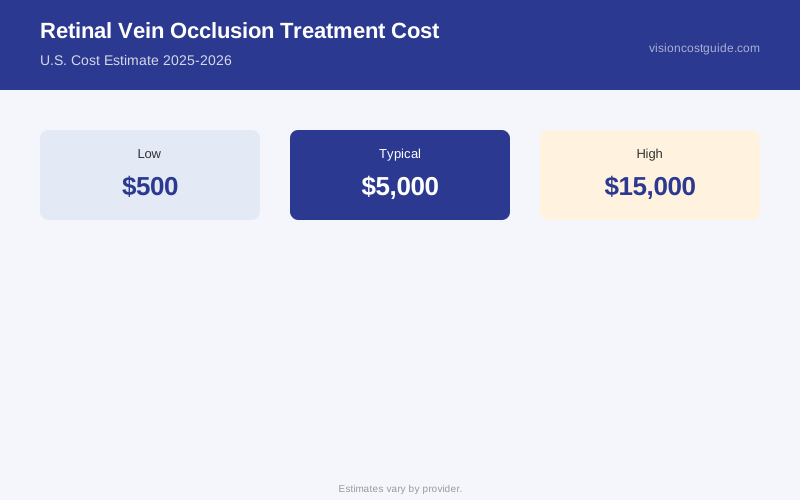
Retinal vein occlusion treatment costs $1,200–$12,000+ per year depending on the agent used, injection frequency, and your insurance coverage. Bevacizumab is equally effective to branded anti-VEGF drugs for most RVO cases and dramatically reduces costs. Medicare covers treatment as medically necessary, though the 20% coinsurance adds up over a multi-year course. CRVO requires longer, more intensive treatment than BRVO — get an honest estimate from your retina specialist about your expected treatment duration based on OCT imaging of your specific case.