42% of people diagnosed with retinitis pigmentosa (RP) are legally blind by age 40. That statistic from the Foundation Fighting Blindness shapes everything about how patients and families approach treatment costs—because with RP, you’re often not paying to restore vision, you’re paying to slow the clock.
Here’s what that actually costs in 2025–2026.
What Is Retinitis Pigmentosa?
RP is an inherited retinal dystrophy that progressively destroys photoreceptors, causing tunnel vision and eventually blindness. About 100,000 Americans have RP, according to NEI. There’s no cure for most forms, but several strategies can slow progression or help patients adapt.
Treatment options range from pennies-per-day supplements to one of the most expensive drugs in US history.
Treatment Cost Overview
| Treatment | Cost Range |
|---|---|
| Annual retina specialist visits | $250–$700/visit |
| Electroretinogram (ERG) testing | $300–$800 |
| Vitamin A palmitate supplementation | $100–$300/year |
| Omega-3 DHA supplementation | $50–$150/year |
| Low vision rehabilitation program | $500–$2,500 |
| Low vision aids (magnifiers, telescopes) | $200–$5,000 |
| Electronic vision aids (OrCam, eSight) | $2,500–$10,000 |
| Luxturna gene therapy (RPE65 mutation) | $425,000 per eye |
| Argus II retinal prosthesis (legacy) | $150,000+ |
The $850,000 Gene Therapy Question
Luxturna (voretigene neparvovec) was approved by the FDA in 2017 for patients with RPE65 mutation-associated retinal dystrophy—a small subset of RP. At $425,000 per eye ($850,000 total), it’s one of the most expensive treatments in medicine.
The critical caveat: Luxturna only works for the RPE65 mutation, which affects perhaps 1,000–2,000 patients in the US. If you don’t have that specific mutation, Luxturna isn’t an option for you.
For those who do qualify, insurance coverage has improved dramatically. Under the ACA, insurers cannot deny coverage for FDA-approved gene therapies for serious conditions. Medicaid covers it in most states. Medicare Part B covers it when administered in an outpatient setting. Spark Therapeutics (Luxturna’s maker) also offers outcomes-based contracts with some payers, where full payment only occurs if the treatment works.
Real out-of-pocket: $0–$20,000 for most insured patients, depending on plan cost-sharing and deductibles.
What Most RP Patients Actually Spend
The majority of RP patients don’t have RPE65 mutations. For them, treatment is focused on slowing progression and adapting:
Vitamin A palmitate — A landmark study by the NEI (Berson et al.) found that 15,000 IU of vitamin A palmitate daily slowed the rate of ERG decline by 20% per year in most RP patients. At $8–$25/month, this is among the most cost-effective interventions in retinal disease. Your retina specialist can confirm whether you’re a candidate.
DHA supplementation — Some studies suggest adding omega-3 DHA (1,200 mg/day) alongside vitamin A provides additional benefit. Cost: $4–$12/month.
Low vision rehabilitation — As central vision narrows, low vision ODs help patients maximize remaining sight with telescopic glasses, high-powered magnifiers, and training. Programs cost $500–$2,500, and Medicare Part B covers low vision evaluation when medically indicated.
Over 100 clinical trials for RP treatments are currently enrolling in the US (clinicaltrials.gov). Gene therapies, neuroprotective agents, and retinal implants are being tested. Participation is typically free, and some trials even cover travel. If you have RP, register with the Foundation Fighting Blindness’s My Retina Tracker program—researchers contact registrants when relevant trials open.
Electronic Vision Aids: A Growing Cost Category
As RP progresses, electronic aids help patients with activities of daily living:
- OrCam MyEye ($3,500–$4,500): wearable AI device that reads text, recognizes faces
- eSight 4 ($6,000–$10,000): electronic glasses that enhance remaining vision
- NuEyes ($2,500–$4,000): smart glasses with built-in magnification and camera
Insurance rarely covers these as durable medical equipment (DME), though some state Vocational Rehabilitation programs do. The IRS classifies them as deductible medical expenses if prescribed by a physician.
Insurance Navigation for RP
Medical insurance covers monitoring visits, ERG testing, and gene therapy when eligible. Medicare covers low vision evaluation (Part B) and Luxturna (Part B, outpatient). Vision insurance typically does NOT cover RP-related specialty care—don’t submit those retina bills to your vision plan.
State vocational rehabilitation programs can fund low vision aids, electronic devices, and job accommodation tools for working-age patients with vision loss. Contact your state’s VR office; waiting lists exist, but the funding is real.
The Bottom Line
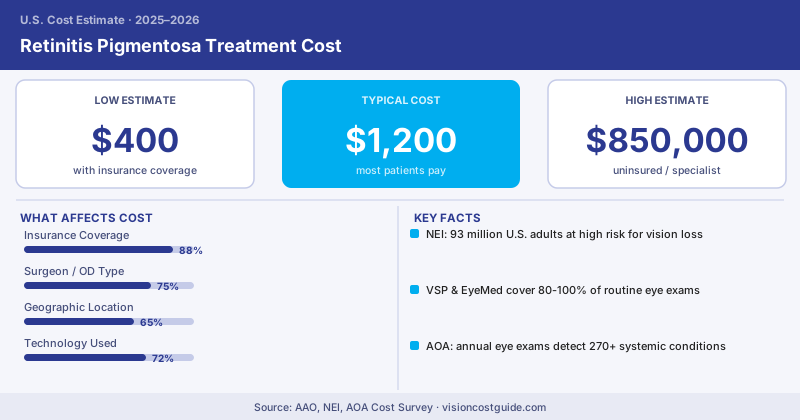
For most RP patients in 2025, annual costs run $400–$1,500 for monitoring and supplements. Those requiring low vision aids or rehabilitation add $500–$3,000 more. Gene therapy, when applicable, is increasingly covered but only for a small genetic subset.
The most actionable step: confirm your RP genotype. Knowing your specific mutation opens or closes treatment doors—including eligibility for gene therapy, clinical trials, and emerging treatments in the pipeline. Genetic testing costs $250–$800, and most major medical insurers now cover it for retinal dystrophies.