42% of people diagnosed with glaucoma say they struggle to use their eye drops consistently every day. If you’re one of them — or if your drops aren’t controlling your eye pressure — your ophthalmologist may have brought up selective laser trabeculoplasty, or SLT. But what does it actually cost?
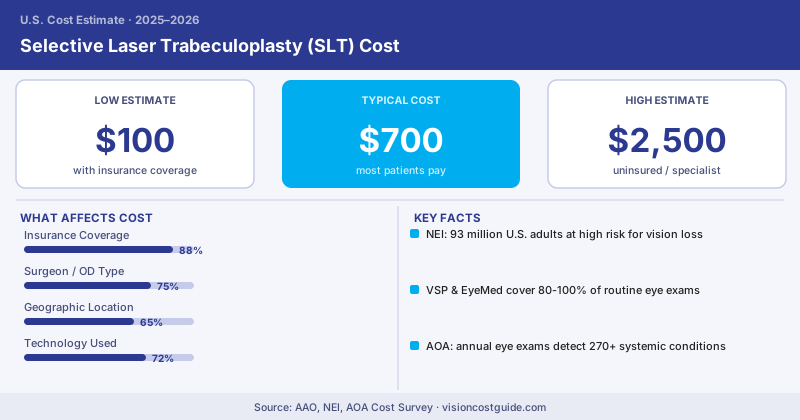
SLT runs $400–$2,500 per eye out-of-pocket, with most insured patients paying $100–$500 after copays and deductibles. Medicare typically covers it. The good news: it often works just as well as drops, and you only need it once every few years.
What Is SLT and Why Might You Need It?
SLT uses short pulses of low-energy laser light to stimulate the eye’s natural drainage tissue (the trabecular meshwork), helping fluid drain more efficiently and lowering intraocular pressure (IOP). Unlike older argon laser trabeculoplasty (ALT), SLT doesn’t scar the tissue, so it can be repeated if needed.
A landmark 2019 study published in The Lancet — the LiGHT trial — found that SLT was equally effective as daily eye drops for newly diagnosed glaucoma, and 74% of SLT patients required no drops at all after three years. That’s a meaningful quality-of-life win for anyone who’s been wrestling with medication schedules and side effects.
The Glaucoma Research Foundation estimates that over 3 million Americans have glaucoma, with millions more having ocular hypertension that puts them at risk. SLT is now one of the first-line treatment options recommended by many glaucoma specialists.
SLT Cost Breakdown
| Scenario | Typical Cost Range |
|---|---|
| Medicare Part B (with Medigap) | $0–$50 per eye |
| Medicare Part B (without Medigap) | $80–$200 per eye |
| Commercial insurance | $100–$500 per eye |
| Self-pay, outpatient clinic | $400–$1,200 per eye |
| Self-pay, ambulatory surgery center | $1,000–$2,500 per eye |
| Repeat SLT (3–5 years later) | Same cost range |
The procedure takes 5–10 minutes and is usually done in the office or an ASC. Cost differences between those two settings are significant for self-pay patients — choose the in-office option when possible.
Insurance and Medicare Coverage
SLT is a medically necessary procedure billed under CPT code 65855. Because it treats elevated IOP and glaucoma, it’s covered under the medical benefit on most plans — not the vision benefit.
- Medicare Part B: Covers 80% after your deductible. With a Medigap supplement, your share could be minimal.
- Commercial plans: Blue Cross, Aetna, Cigna, and most major carriers cover SLT. Check whether your plan requires prior authorization.
- Vision-only plans (VSP, EyeMed): These typically do NOT cover SLT. It’s a medical procedure, not a routine vision service.
Some commercial insurers require documentation of failed or intolerable glaucoma drops before approving SLT. Ask your ophthalmologist’s office to submit clinical notes showing your diagnosis and the medical necessity of the laser. Getting this documentation in order before scheduling can prevent surprise claim denials.
What Affects the Price?
Geography is a big variable. SLT in a major metro area often runs 40–60% higher than in a mid-size city. A glaucoma specialist in San Francisco might charge $1,800 for self-pay; a general ophthalmologist in a mid-size southern city might charge $500.
Specialist vs. general ophthalmologist: Glaucoma specialists (fellowship-trained) typically charge more — but they also see complex cases where SLT may be combined with other glaucoma management.
One eye vs. two: Most insurers treat each eye as a separate procedure with its own copay/coinsurance. If both eyes need treatment, budget accordingly.
Repeat treatments: SLT can be repeated when IOP control fades, typically after 3–5 years. The repeat procedure costs the same as the first.
What to Expect During and After SLT
You’ll sit at a slit lamp while the laser is applied — usually 50 low-energy pulses around the drainage angle. The procedure doesn’t require incisions or stitches, and there’s no patch afterward.
Most patients notice minimal discomfort. Mild inflammation and a temporary IOP spike are possible in the first few hours, which is why your doctor will monitor your pressure post-procedure.
IOP typically begins to drop within 1–3 months as the trabecular meshwork responds. Your ophthalmologist will monitor you closely during this window.
Don’t stop glaucoma drops on your own after SLT. Your ophthalmologist will guide you on tapering medications based on how your pressure responds. Stopping too soon — before your pressure is confirmed stable — can cause a dangerous IOP spike and accelerated optic nerve damage.
SLT vs. Drops: The Cost Angle
Over a 3–5 year window, SLT may actually be cheaper than brand-name glaucoma drops. Brand-name prostaglandin analogs like Xalatan or Lumigan can run $100–$250/month without insurance. Generic versions are cheaper, but patients on multiple classes of drops can still spend $500–$1,500/year on medications.
A one-time SLT at $600 self-pay with 3–5 years of effect compares favorably to years of monthly prescription costs. If your insurer covers SLT, the math tilts even more in the laser’s favor.
Bottom Line
SLT is effective, repeatable, and usually covered by Medicare and major commercial insurance. Most insured patients pay $100–$500 per eye. Self-pay costs range from $400–$2,500 depending on your location and facility type. If you’re struggling with glaucoma drops — or if your IOP still isn’t controlled — SLT is worth a serious conversation with your ophthalmologist.