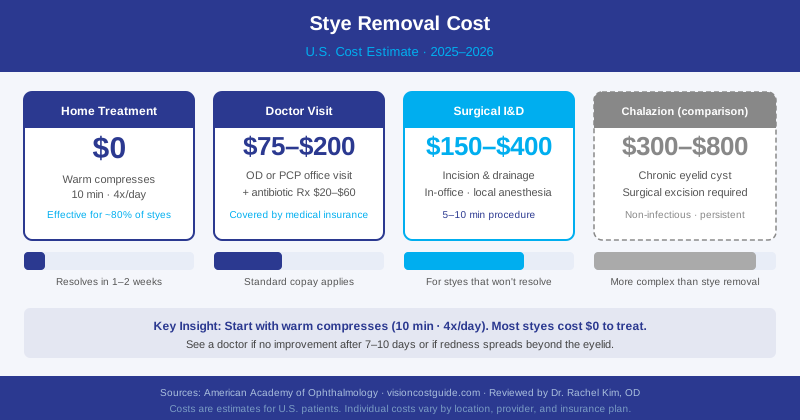
That red, painful bump on your eyelid? It’s almost certainly a stye — and there’s a good chance you don’t need to spend a dime on it. Around 80% of styes resolve completely with nothing more than a warm washcloth and a little patience. But if yours doesn’t, here’s exactly what a doctor visit or minor surgical procedure will cost you, and how to know when it’s time to make that call.
What Is a Stye, Exactly?
A stye (medically called a hordeolum) is an acute bacterial infection of a gland in your eyelid. There are two types:
External hordeolum: Infects the follicle of an eyelash or the small Zeis gland next to it. You’ll see a tender red bump right at the eyelid margin, often coming to a visible yellow point — like a pimple on your lid. This is the most common type.
Internal hordeolum: Infects a meibomian gland deeper inside the eyelid. It’s usually more painful, doesn’t come to a visible head, and takes longer to resolve. Sometimes it requires a doctor to drain it.
Both types are typically caused by Staphylococcus aureus bacteria. They’re not contagious through casual contact, but they are uncomfortable.
Home Treatment: Free and Usually Effective
The standard treatment your eye doctor will tell you to do first — whether or not you ever come in — is warm compresses. Here’s why most people do it wrong and get slower results.
What to do: Soak a clean washcloth in warm (not scalding — comfortable on your wrist) water. Wring it out and place it gently over your closed eyelid. Hold it there for 10 minutes. Reheat every 2–3 minutes to keep it warm. Repeat 4 times per day.
Why most people do it wrong: They hold it for 2 minutes, once a day. That’s not enough heat, not enough time, and not enough frequency to soften the blocked secretion and encourage drainage.
Cost: $0. A clean washcloth is all you need. (Microwavable eye masks sold for $15–$25 can make this easier to sustain throughout the day, but aren’t necessary.)
Timeline: Most external styes begin improving within 3–5 days and fully resolve within 1–2 weeks of consistent warm compress use.
Don’t squeeze a stye. Don’t try to pop it. This pushes bacteria deeper and can spread the infection — exactly what you don’t want.
What a Doctor Visit Costs
If your stye isn’t improving after 7–10 days of proper warm compress therapy, it’s time to see an eye doctor or your primary care physician.
| Treatment Option | Typical Cost | Notes |
|---|---|---|
| Home treatment (warm compresses) | $0 | Effective for most styes within 1–2 weeks |
| OD or PCP office visit | $75–$200 | Copay with insurance; full fee without |
| Prescription antibiotic ointment | $20–$60 | Erythromycin or bacitracin; modest benefit for typical styes |
| Oral antibiotics (for spreading infection) | $15–$50 | Generic doxycycline or amoxicillin; needed only for cellulitis |
| In-office incision and drainage (I&D) | $150–$400 | For styes that won’t resolve; covered by medical insurance |
| Chalazion excision (comparison) | $300–$800 | Different procedure for the chronic, non-infectious form |
Your regular medical insurance — not vision insurance — covers stye treatment, since a stye is a medical condition, not a routine vision care issue. Most patients pay only their standard office visit copay ($20–$75 for in-network) for evaluation and antibiotic prescriptions. If you need incision and drainage, that’s typically billed as a minor in-office procedure and covered after your deductible and copay.
What Happens at the Doctor’s Office
Evaluation: Your doctor confirms it’s a stye (not a chalazion, cyst, or tumor), checks whether the infection is spreading, and assesses the need for drainage.
Antibiotic drops or ointment: For typical uncomplicated styes, topical antibiotics have limited evidence of benefit — warm compresses do more. But doctors often prescribe them as a precaution, especially if there’s visible purulence.
Incision and drainage (I&D): If the stye has a large collection of pus and isn’t pointing or draining on its own, the doctor can perform a quick in-office procedure. Under local anesthesia (a numbing eye drop and a small injection near the lid), they make a tiny incision and express the contents. It takes about 5–10 minutes, costs $150–$400, and you drive yourself home afterward.
Stye vs. Chalazion: Why the Cost Difference Matters
A stye and a chalazion look similar but behave very differently — and the treatment costs reflect that.
A stye is infectious and acute: it hurts, appears quickly, and usually resolves within 2 weeks. When it doesn’t, incision and drainage is a simple, fast procedure.
A chalazion is a chronic, non-infectious granuloma — essentially scar tissue forming around a blocked meibomian gland. It can persist for months, doesn’t respond to antibiotics, and often requires a more involved surgical excision or steroid injection to resolve. That’s why chalazion removal typically costs $300–$800, while stye drainage stays in the $150–$400 range.
If you’ve had a “stye” in the same spot that keeps coming back or has been there for more than 6–8 weeks without much change, it’s almost certainly a chalazion, not a stye — and it warrants a different treatment conversation with your eye doctor.
Warning Signs That Require Immediate Care
Go to an eye doctor or urgent care same day if you notice:
- Redness spreading beyond the eyelid onto the cheek or around the eye socket
- Fever alongside eyelid swelling
- Blurry or double vision
- The eyeball itself appears red or swollen
- Pain when moving your eyes
These signs may indicate preseptal cellulitis (an infection spreading through eyelid tissue) or — rarely — orbital cellulitis (spreading toward the eye socket). Orbital cellulitis is a medical emergency requiring IV antibiotics. The American Academy of Ophthalmology notes that orbital cellulitis can threaten vision and, in rare cases, is life-threatening. Don’t wait for a warm compress to fix this.
The Bottom Line
A stye that’s small, improving, and caught early costs you nothing but time and a warm washcloth. If you need a doctor, plan on $75–$200 for the visit. If it needs draining, you’re looking at $150–$400 — a one-time minor procedure with a fast recovery. The key is not letting a manageable infection drag on without treatment: a neglected stye is how you end up with a chronic chalazion that’s much more expensive and stubborn to treat.
Frequently Asked Questions
Most styes require no removal — they resolve on their own within 1–2 weeks with warm compress therapy ($0 cost if you use a warm washcloth). If you see a doctor, expect a $75–$200 office visit copay. Surgical incision and drainage (I&D) for a stye that won't resolve costs $150–$400 in-office, typically covered by insurance after your copay or deductible.
See a doctor if: the stye is painful and not improving after 1 week of warm compresses, your vision is affected, the entire eyelid is swollen (possible preseptal cellulitis requiring antibiotics), or you have a recurring stye in the same location (which may actually be a chalazion requiring different treatment). Uncomplicated styes that are improving don't need a doctor visit.
A stye (hordeolum) is an acute bacterial infection of an eyelid gland — painful, red, typically resolves within 1–2 weeks. A chalazion is a chronic, non-infectious blockage of the same glands — usually painless, can persist for months. Chalazion removal costs $300–$800 because they more often require in-office surgical excision. Styes are cheaper to treat because most resolve with home care; when they don't, the incision and drainage procedure is simpler and less expensive than chalazion excision.