You woke up, looked in the mirror, and the white of one eye is bright red. No pain. Normal vision. Just a startlingly dramatic red patch that looks like something terrible happened overnight.
Here’s the thing: it almost certainly didn’t. And the treatment cost is probably zero.
What Is a Subconjunctival Hemorrhage?
A subconjunctival hemorrhage (SCH) is a broken blood vessel under the clear conjunctiva that coats the white of your eye. Blood pools in the space between the conjunctiva and the sclera, creating a vivid red or dark red spot—sometimes covering most of the visible white.
It looks alarming. It usually isn’t.
Common causes include: straining (coughing, sneezing, vomiting, heavy lifting), minor eye trauma, contact lens wear, Valsalva maneuvers, and occasionally blood thinners or hypertension. The AAO reports that SCH is one of the most common ocular findings in adults and is overwhelmingly benign and self-resolving.
Realistic Cost Expectations
| Scenario | Cost |
|---|---|
| No symptoms, no treatment needed | $0 |
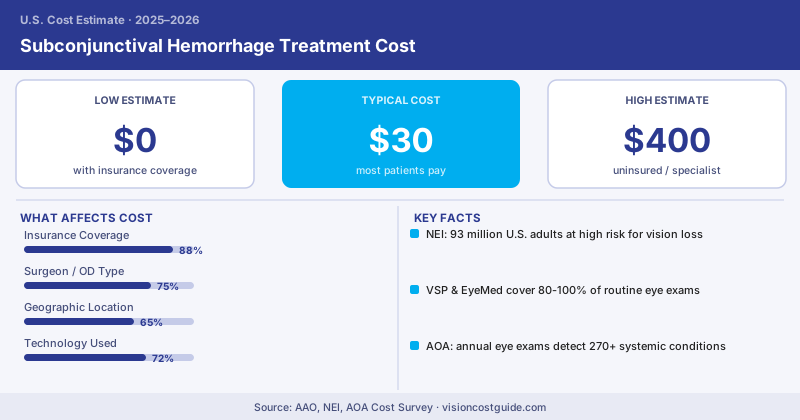
| OD visit for reassurance / first occurrence | $80–$200 |
| ER visit (unnecessary for typical SCH) | $500–$2,500 |
| Artificial tears (lubricating comfort) | $10–$30 |
| Blood pressure evaluation (if elevated BP suspected) | $0 (pharmacies) to $100 (doctor visit) |
| Coagulation labs (if on blood thinners or recurrent) | $100–$400 |
Why Most People Spend $0
An uncomplicated SCH in an otherwise healthy adult with no symptoms requires no treatment. The blood absorbs on its own within 1–3 weeks—just like a bruise. You don’t need drops, medication, or surgery. Artificial tears can reduce irritation if the eye feels scratchy, but they don’t accelerate healing.
If it’s your first SCH and you have no pain, no vision change, and no history of clotting disorders or blood thinners, a pharmacy-bought bottle of artificial tears ($10–$15) and two weeks of patience is the complete treatment.
When a Doctor Visit Is Worth It
See an eye doctor or your primary care physician if:
- It’s your first one — worth a quick eval to confirm diagnosis and rule out high blood pressure
- You’re on anticoagulants (warfarin, Eliquis, Xarelto, aspirin therapy) — your doctor should know
- It follows significant trauma — a SCH after a blow to the eye warrants slit-lamp exam to rule out scleral rupture
- It’s recurrent (3+ in a year) — warrants coagulation workup
- You have pain, vision change, or floaters — these are NOT typical SCH symptoms and need same-day evaluation
An optometrist or ophthalmologist visit for a routine SCH confirmation runs $80–$200, covered by medical insurance (not vision insurance, since it’s not a routine exam). Your copay may be $20–$50.
ER visits for subconjunctival hemorrhage cost $500–$2,500—and almost never result in any treatment beyond what your eye doctor would do. Unless you have pain, vision loss, significant trauma, or a known bleeding disorder, skip the ER. Call your OD first; most will fit you in same-day and can confirm it’s benign for a fraction of the cost.
The Blood Pressure Connection
A single SCH in a healthy person rarely signals hypertension. But recurrent SCHs—especially bilateral or spontaneous—can be associated with elevated blood pressure. The connection isn’t strong enough that a single episode requires cardiology workup, but it’s a reasonable nudge to check your BP (free at most pharmacies, or ask your PCP to note it at your next visit).
If your systolic pressure is consistently above 180 mmHg, that’s hypertensive urgency, and the SCH is the least of your concerns. Get BP treatment—for both your heart and your eyes.
Anticoagulant Patients: A Note
If you’re on warfarin, Eliquis, Plavix, or similar medications, a subconjunctival hemorrhage is common and doesn’t mean your dosing is dangerously off. However, do tell your prescribing physician—they may want to check your INR (warfarin) or review timing if the SCH is large or recurrent.
A routine INR check runs $30–$80 without insurance; most anticoagulation clinics do it at no extra charge during regular monitoring.
What the Research Shows
A 2021 retrospective study of over 1,200 SCH cases published in BMC Ophthalmology found that 94% resolved completely without treatment within 14 days, and fewer than 2% of cases indicated a serious underlying systemic condition. The authors concluded that routine specialist referral for isolated, atraumatic SCH in healthy adults is unnecessary.
The Bottom Line
The most expensive thing you can do about a typical subconjunctival hemorrhage is panic and go to the emergency room. The most appropriate thing you can do: check your blood pressure, use artificial tears if it’s scratchy, and take a photo to track resolution.
Total treatment cost for a typical, uncomplicated SCH in a healthy adult: $0–$30. The only reason costs climb is when patients seek emergency-level care for a condition that manages itself.