Most people with glaucoma manage it with drops or laser treatments. But for about 10–15% of patients, those options aren’t enough — intraocular pressure stays dangerously high, and the optic nerve keeps suffering. That’s when a glaucoma surgeon brings up a tube shunt. And the first question is almost always: how much does that cost?
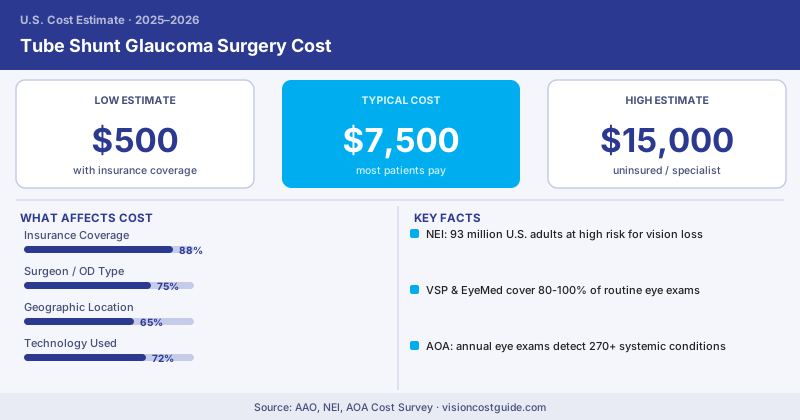
Tube shunt surgery runs $5,000–$15,000 per eye without insurance, with the surgical implant device itself accounting for $1,000–$3,000 of that total. Most patients with Medicare or comprehensive commercial insurance pay $500–$3,000 out-of-pocket after coverage kicks in.
What Is a Tube Shunt?
A tube shunt (also called a glaucoma drainage device or aqueous shunt) is a small silicone tube attached to a plate that’s sewn to the outer surface of the eye. The tube drains excess aqueous fluid away from the front of the eye to the plate, where it’s absorbed by surrounding tissue — lowering IOP.
The two most common devices are:
- Ahmed Glaucoma Valve (AGV): Has a flow-regulating mechanism to prevent IOP from dropping too low too fast. Commonly used in patients with neovascular glaucoma and complex cases.
- Baerveldt Glaucoma Implant (BGI): A larger plate that drains more fluid; often preferred for patients who need maximum IOP reduction.
The Tube Versus Trabeculectomy (TVT) study, a major NIH-funded clinical trial, found that tube shunts had a higher success rate than trabeculectomy at 5 years (34% vs. 13% failure rate). This has made tube shunts increasingly the preferred approach for many glaucoma specialists, especially in patients who’ve had prior eye surgery.
Cost Breakdown
| Cost Component | Typical Range |
|---|---|
| Surgeon’s fee | $2,000–$5,000 |
| Facility / OR fee | $2,500–$6,000 |
| Anesthesia | $500–$1,500 |
| Glaucoma implant device (Ahmed / Baerveldt) | $1,000–$3,000 |
| Pre-op and post-op visits | $400–$1,000 |
| Total self-pay estimate | $5,000–$15,000 |
| Medicare out-of-pocket (with Medigap) | $200–$600 |
| Commercial insurance out-of-pocket | $500–$3,000 |
Insurance Coverage for Tube Shunts
Tube shunt surgery is medically necessary for uncontrolled glaucoma — insurers know it. Coverage is standard:
- Medicare Part B/Part A: Covers the procedure, facility fee, anesthesia, and the device. You’ll owe 20% of Medicare’s approved amount after your Part B deductible ($240 in 2024), or less if you have Medigap.
- Commercial plans: The surgery is covered under the medical benefit (CPT codes 66179 or 66180). Prior authorization is almost always required. Your surgeon’s office will handle this, but confirm it’s submitted before scheduling.
- Medicaid: Coverage varies by state. Some states require prior authorization and specialist approval.
Operating room fees, anesthesiology, and the device itself may be billed by separate entities. Even if your surgeon is in-network, verify that the hospital or ASC and anesthesiologist are also in-network. Under the No Surprises Act, you’re entitled to a good-faith cost estimate before a scheduled procedure — request it.
Ahmed vs. Baerveldt: Does the Device Affect Cost?
The Ahmed Glaucoma Valve costs slightly more to manufacture than the Baerveldt plate, but the price difference at the insurance level is usually minimal — both are billed under the same CPT framework. For self-pay patients, device cost can differ by $200–$500 depending on surgeon preference and hospital supply contracts.
The clinical choice between Ahmed and Baerveldt depends on your specific glaucoma type, prior surgeries, and target IOP. Don’t let cost be the primary driver of that decision — the right device for your anatomy matters more.
What the Recovery Looks Like
This is real surgery — not a laser in an office chair. Expect:
- Anesthesia: Usually local with IV sedation, occasionally general.
- Duration: 1–2 hours in an operating room.
- Recovery: Blurry vision for 4–8 weeks. Activity restrictions for 2–4 weeks.
- Medications: Post-op steroid and antibiotic eye drops for 4–8 weeks.
- Follow-up: Frequent office visits in the first 3 months to monitor IOP, adjust sutures, and watch for complications.
The Glaucoma Research Foundation notes that tube shunts lower IOP by an average of 30–40%, and many patients can reduce or eliminate drops afterward — a meaningful quality-of-life improvement.
Tube shunt surgery carries real risks including diplopia (double vision), hypotony (IOP too low), infection, and tube erosion through the conjunctiva. These complications can require additional procedures. Discuss the risk profile with a fellowship-trained glaucoma specialist, not just a general ophthalmologist.
Ways to Reduce Your Out-of-Pocket Cost
Schedule at an ASC rather than a hospital when possible. Ambulatory surgery centers have significantly lower facility fees than hospital outpatient departments — often 40–60% less — and many glaucoma surgeons operate at both.
Maximize your deductible timing. If you’ve already hit your annual deductible through other care, scheduling the surgery before year-end means the procedure cost applies only to coinsurance, not the deductible.
Apply for patient assistance: Some device manufacturers offer financial assistance for uninsured or underinsured patients. Ask your surgeon’s coordinator.
Seek care at academic medical centers: Teaching hospitals with glaucoma fellowship programs often have sliding-scale fees for uninsured patients.
Bottom Line
Tube shunt surgery is a significant investment — $5,000–$15,000 for self-pay patients — but it’s often the most effective remaining option when drops and laser have failed. With Medicare or solid commercial coverage, your out-of-pocket is typically $500–$3,000. This is a procedure where choosing the right surgeon and getting insurance authorization right matters enormously. Don’t rush it.