In 2010, a basic pair of glasses might run you $150. Today the same purchase at a chain retailer can hit $400 once you add lenses and coatings. That price creep is exactly why vision discount plans exist — a low monthly fee that knocks a chunk off retail. But are they actually a deal, or just clever marketing? Let’s run the numbers.
What a Vision Discount Plan Is
A discount plan is not insurance. You pay a small membership fee, flash a card at participating providers, and get a fixed percentage off the retail price. The plan never pays out any money — it just shrinks your bill. That’s the fundamental split from real vision insurance, which pays fixed allowances instead.
The appeal is simplicity: no claim forms, no allowances to track, no waiting periods, and usually broad provider acceptance.
What Discount Plans Cost — and Save
| Service | Typical Discount | Example Savings |
|---|---|---|
| Comprehensive eye exam | 10–30% off | $15–$45 off a $150 exam |
| Frames | 20–40% off | $50–$120 off a $300 frame |
| Lenses & coatings | 20–40% off | $40–$100 off |
| Contact lenses | 10–20% off | $30–$80/yr |
| LASIK (partner centers) | 10–25% off | $400–$1,000 off |
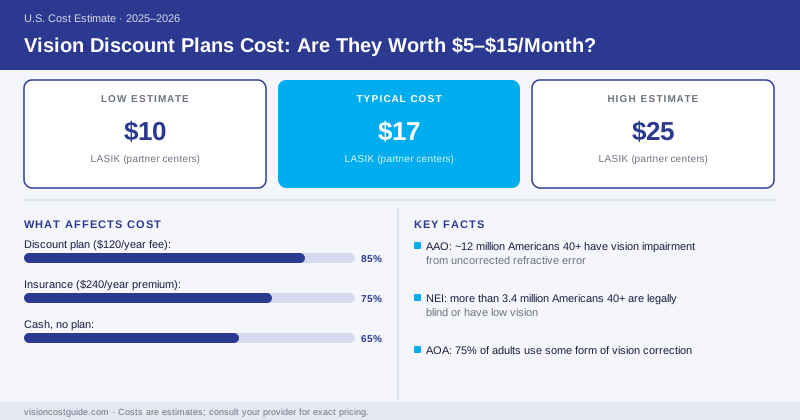
Membership runs $5–$15/month ($60–$180/year). Some plans bundle vision into a broader medical discount membership for one combined fee.
The break-even line is your buying habits. If you only need an annual exam and keep your frames for years, a discount plan’s low fee beats both insurance and cash. But because a discount is a percentage of a high retail price, big eyewear purchases can still cost a lot — 30% off a $400 order is still $280. Heavy annual buyers usually save more with insurance allowances. Match the plan to how often you actually buy.
Discount Plan vs. Insurance vs. Cash
Say you need an exam plus one new pair of glasses:
Discount plan ($120/year fee): 25% off $150 exam = $112 + 30% off $300 glasses = $210, plus $120 fee = $442 total
Insurance ($240/year premium): $10 exam copay + $50 frames after allowance + $25 lens copay = $85, plus $240 premium = $325 total
Cash, no plan: $150 exam + $300 glasses = $450 total
Here insurance wins for a heavy buyer. But flip the scenario — only an exam, no new glasses — and the discount plan ($120 + $112 = $232) beats insurance ($240 + $10 = $250) and crushes paying cash.
When a Discount Plan Is the Right Call
Discount plans make the most sense if you:
- Only need an eye exam most years and rarely replace frames
- Want zero paperwork and no waiting periods
- Shop at providers your discount plan accepts (verify before you buy)
- Are planning LASIK and want a modest discount on the procedure
The Vision Council reported in 2024 that around 187 million Americans use vision correction — but usage frequency varies enormously, and that’s the single biggest factor in whether a discount plan or insurance saves you more.
A few well-known programs are worth knowing about. Some warehouse clubs and large retailers bundle a vision discount into their membership, so you may already have access without paying anything extra. Standalone vision discount cards from companies like EyeMed and VSP also exist alongside their insurance products, aimed at people who want savings without a monthly premium. And some AAA and AARP memberships include eyewear discounts as a perk. Before paying for a new discount plan, audit the memberships you already hold — there’s a decent chance one of them already gets you 20–30% off at a nearby optical shop.
Read the fine print before joining. Some “discount plans” are bundled into membership programs loaded with services you’ll never use, and a few aren’t honored at the retailers near you. Confirm your local optical shops and eye doctor actually accept the plan. And never mistake a discount for real coverage — neither covers medical eye disease, which runs through your health plan.
Stack It With an FSA
Whatever you choose, remember discount-plan purchases are still out-of-pocket dollars — which means you can pay for the discounted exam, glasses, or contacts with pre-tax FSA money. Those vision costs are FSA/HSA eligible, so the tax savings stack right on top of the discount. For light eye-care users, a cheap discount plan plus an FSA can be the lowest-cost setup of all.
Frequently Asked Questions
Most vision discount plans cost $5–$15/month, or $60–$180/year. Some are bundled into broader medical discount memberships for a single fee.
Discount plans typically offer 10–30% off eye exams and 20–40% off frames and lenses. On $400 of annual eye care, that can mean $80–$120 in savings.
For light users who only need occasional exams, discount plans usually win on cost. For people who buy glasses or contacts every year, traditional insurance with fixed allowances often saves more.